
AI Video Generator Logistics Clips Should Separate Order From Time
A parcel moves from a loading bay to a sorting belt and then into a delivery van. The whole journey takes a few seconds on

A parcel moves from a loading bay to a sorting belt and then into a delivery van. The whole journey takes a few seconds on

The competition between The Coca-Cola Company and PepsiCo in the soft drink category in the United States continues, although the former is increasingly outpacing the

The U.S. company Nucor stated that Section 232 is more effective for steel products than anti-dumping and countervailing duties. The Section 232 steel tariffs were

Mexico ranked as Jabil’s most important international market, ahead of Malaysia and China, in fiscal year 2026, which ended on August 31. During that year,

Compilation videos, such as «best of» reels, monthly recaps, or themed collections, are one of the simplest formats to produce once you have the source

The National Council of the Export Manufacturing Industry (Index) will host the announcement that the federal government is expected to make next week regarding an

The European Union is interested in playing a greater role in Mexico’s dependence on foreign inputs incorporated into Mexican exports. Furthermore, the European Union has
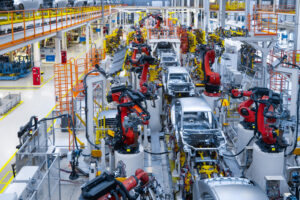
The Mexican Automotive Industry Association (AMIA) proposed the creation of a T-MEC rules of origin audit manual. This proposal was submitted to the U.S. International

A wallet migration can require more than moving the same token from one address to another. If the new environment is built around USDC rather

The Economic globalization represents an unstoppable trend in the world, the Chinese government stated regarding WTO reform. “Economic globalization is an unstoppable historical trend that
A parcel moves from a loading bay to a sorting belt and then into a delivery van. The whole journey takes a few seconds on
The competition between The Coca-Cola Company and PepsiCo in the soft drink category in the United States continues, although the former is increasingly outpacing the
The U.S. company Nucor stated that Section 232 is more effective for steel products than anti-dumping and countervailing duties. The Section 232 steel tariffs were
Mexico ranked as Jabil’s most important international market, ahead of Malaysia and China, in fiscal year 2026, which ended on August 31. During that year,
Compilation videos, such as «best of» reels, monthly recaps, or themed collections, are one of the simplest formats to produce once you have the source
The National Council of the Export Manufacturing Industry (Index) will host the announcement that the federal government is expected to make next week regarding an
The European Union is interested in playing a greater role in Mexico’s dependence on foreign inputs incorporated into Mexican exports. Furthermore, the European Union has
The Mexican Automotive Industry Association (AMIA) proposed the creation of a T-MEC rules of origin audit manual. This proposal was submitted to the U.S. International
A wallet migration can require more than moving the same token from one address to another. If the new environment is built around USDC rather
The Economic globalization represents an unstoppable trend in the world, the Chinese government stated regarding WTO reform. “Economic globalization is an unstoppable historical trend that