
The U.S. Semiconductor Industry Association (SIA) has proposed harmonizing semiconductor regulations across North America.
In a letter to the U.S. Trade Representative (USTR), the SIA stated that this harmonization of common standards could be addressed in the review of the United States-Mexico-Canada Agreement (USMCA).
Semiconductor regulations
According to the Washington, D.C.-based association, semiconductors are essential to the economic, industrial, and military strength of the United States.
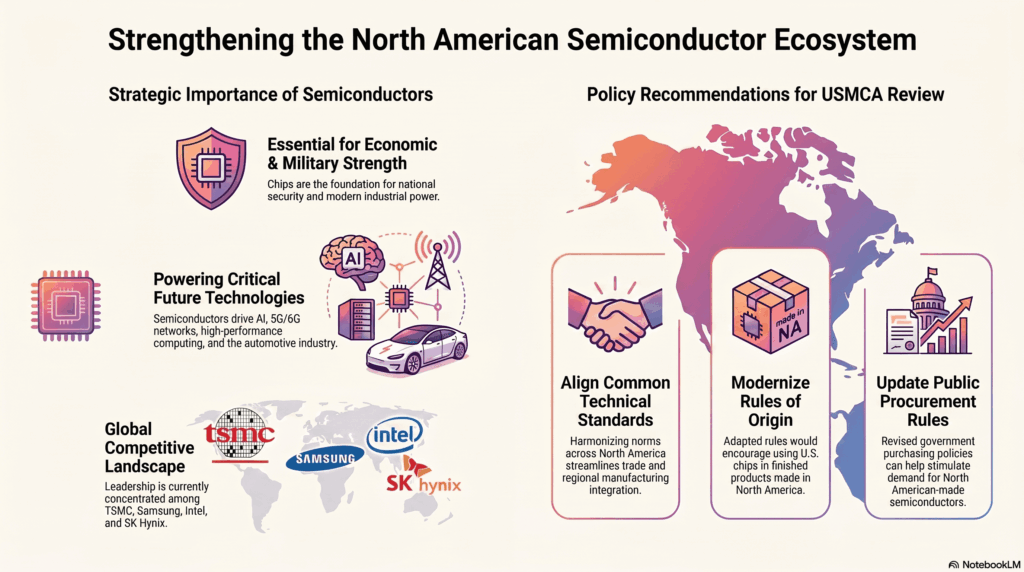
Semiconductors are essential inputs for critical sectors such as artificial intelligence (AI), high-performance computing, and the automotive industry. They also drive consumer electronics, data centers, 5G/6G networks, medical devices, and advanced manufacturing.
In the SIA’s view, a sectoral agreement on semiconductors would further reinforce the USTR’s negotiating objectives related to certain investment and procurement commitments, government procurement rules, digital trade, and economic security alignment policies under the Agreements on Reciprocal Trade (ART) and other agreements reached with key trading partners.
“For example, the USTR should consider seeking updated provisions on government procurement and the alignment of common standards that could help boost demand for U.S. and North American chips through the USMCA review process,” he said.
Rules of Origin
In 2025, the SIA suggested that the USTR push for changes to the rules of origin for its sector under the USMCA. It anticipated that this would increase competitiveness and investment in North America.
“Adapted rules of origin can play an important role in promoting the integration of U.S. semiconductors into various finished products manufactured in North America. We strongly recommend that U.S. negotiators hold meaningful consultations with strategic sectors, including the semiconductor industry, if the USTR considers possible changes to the rules of origin and related calculations during the review process,” he said.
Global semiconductor production is led by TSMC (Taiwan), Samsung Electronics (South Korea), Intel (United States), and SK Hynix (South Korea). These companies possess advanced manufacturing and design capabilities, playing a strategic role in technological competitiveness and global supply chains.