
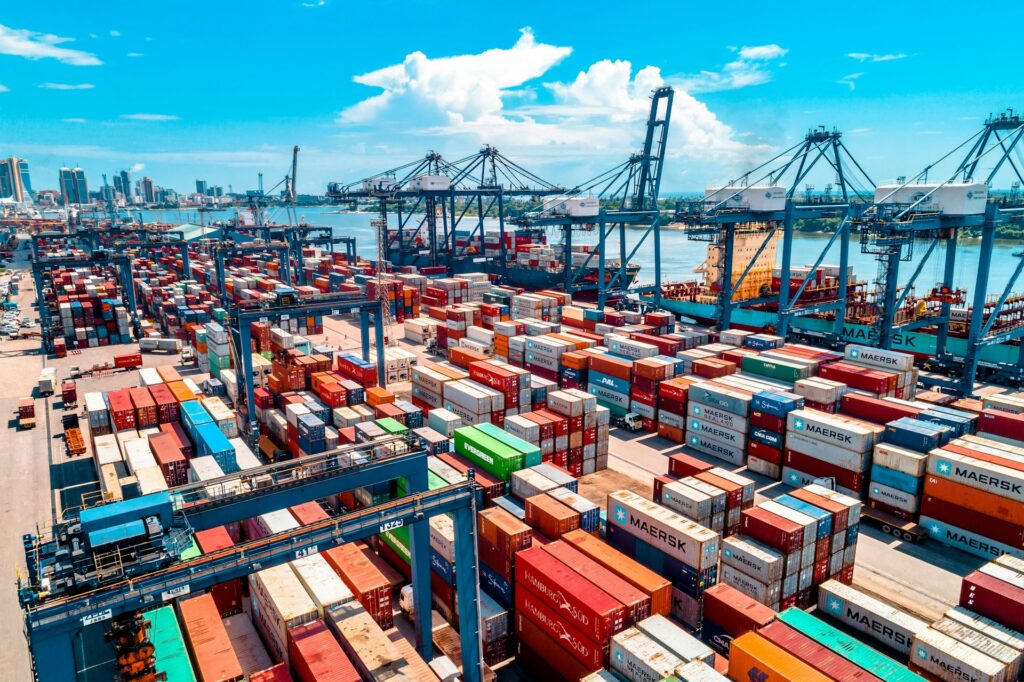
How much does the illegal transshipment of goods to the United States amount to? To answer this question, the White House reviewed five analyses, from both the public and private sectors.
In its report, *The Great Transshipment Scam*, the White House noted that estimates range from $40,000 to $303,000 million annually.
The varying results depend on the methodology and definitions used.
Illegal transshipment of goods to the United States
Goldman Sachs offers the most conservative estimate by focusing solely on the route diversion channel. The White House Council of Economic Advisers estimates the potential illegal transshipment to be in the range of $34.2 billion to $89.6 billion.

Meanwhile, the report itself uses a rounded intermediate figure of $60,000 million. Exigir arrives at a central estimate of approximately $75,000 million based on an analysis at the product and shipment flow levels.
For its part, the Department of Commerce identifies a broader benchmark of $109,000 million in trade transfers and separately estimates about $67,000 million in illegal transshipments through major logistics hubs by 2025.
The report could serve as the basis for President Donald Trump’s administration to impose new tariffs.
Tariff Evasion
The Department of Commerce identifies a broader benchmark of $109 billion in trade transfers and separately estimates approximately $67 billion in illegal transshipments by 2025 through key logistics hubs. Altana’s estimate of $303 billion represents a broad measure of the upper limit of exposure.
These estimates are neither cumulative nor directly comparable, as they use different datasets, methodologies, product selection criteria, and definitions of illegal transshipment. However, they all agree on the conclusion that the magnitude of potential tariff evasion and change of origin is economically significant.
Origin of Goods
Illegal transshipment can involve various practices. These include relabeling, repackaging, and re-invoicing of goods. It may also involve minor processing or false declarations regarding the country of origin.
These actions aim to secure preferential tariff treatment. However, such benefits would not apply if the true economic origin of the products were recognized.
Therefore, a country subject to high tariffs may attempt to enter the U.S. market through another jurisdiction with lower tariffs. In this way, it seeks to reduce its import costs.
Therefore, a country subject to high tariffs may attempt to enter the U.S. market through another jurisdiction with lower tariffs. In this way, it seeks to reduce its import costs.
In turn, the intermediary country can benefit by participating in the production, processing, storage, or logistics of those goods. China represents the clearest historical example of this type of practice.