
Imports of Chinese computers: The United States reduces its purchases by 70%
The United States reduced its imports of Chinese computers by 70% in 2025, to $10.839 billion. The adjustment reshapes foreign trade in the technology sector.

The United States reduced its imports of Chinese computers by 70% in 2025, to $10.839 billion. The adjustment reshapes foreign trade in the technology sector.

The boom in NVIDIA data centers lifted its revenue by 68.2% year-on-year to $193.737 billion in fiscal year 2025, which ended on January 26, 2026.

Tariffs and lower sales hit PACCAR’s profits in 2025, accumulating two year-on-year declines in this indicator. The company‘s net profit fell 42.9% annually in 2025,

If you’ve tried moving goods across borders, you know the real challenge isn’t making the deal on a global B2B marketplace—it’s handling the paperwork associated
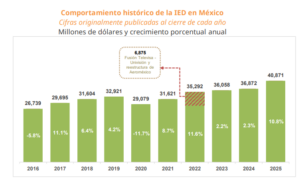
Mexico attracted US$40.871 billion in Foreign Direct Investment (FDI) in 2025, representing year-on-year growth of 10.8%, according to the Ministry of Economy. The data confirms

The United States activated a 10% global tariff under Section 122 of the Trade Act of 1974, effective February 24 at 12:01 a.m. and lasting

Critical mineral processing is shaping up to be one of the central issues in the review of the United States-Mexico-Canada Agreement scheduled for July 2026.
Mexico’s share of imports to the United States reached a historic high for the third consecutive year, rising from 15.5% in 2024 to 15.7% in

Mexican exports to Japan reached a historic high of $7.019 billion in 2025, with year-on-year growth of 18.9%, according to the Japanese Ministry of Finance.

Donald Trump’s tariff measures that comply with legal provisions include Sections 122, 232, 301, and 338, noted Roberto Zapata, senior partner at Consultores Internacionales Ansley
The United States reduced its imports of Chinese computers by 70% in 2025, to $10.839 billion. The adjustment reshapes foreign trade in the technology sector.
The boom in NVIDIA data centers lifted its revenue by 68.2% year-on-year to $193.737 billion in fiscal year 2025, which ended on January 26, 2026.
Tariffs and lower sales hit PACCAR’s profits in 2025, accumulating two year-on-year declines in this indicator. The company‘s net profit fell 42.9% annually in 2025,
If you’ve tried moving goods across borders, you know the real challenge isn’t making the deal on a global B2B marketplace—it’s handling the paperwork associated
Mexico attracted US$40.871 billion in Foreign Direct Investment (FDI) in 2025, representing year-on-year growth of 10.8%, according to the Ministry of Economy. The data confirms
The United States activated a 10% global tariff under Section 122 of the Trade Act of 1974, effective February 24 at 12:01 a.m. and lasting
Critical mineral processing is shaping up to be one of the central issues in the review of the United States-Mexico-Canada Agreement scheduled for July 2026.
Mexico’s share of imports to the United States reached a historic high for the third consecutive year, rising from 15.5% in 2024 to 15.7% in
Mexican exports to Japan reached a historic high of $7.019 billion in 2025, with year-on-year growth of 18.9%, according to the Japanese Ministry of Finance.
Donald Trump’s tariff measures that comply with legal provisions include Sections 122, 232, 301, and 338, noted Roberto Zapata, senior partner at Consultores Internacionales Ansley