Mexico’s beverage industry: FDI and GDP
The GDP of the beverage industry in Mexico grew at a real year-on-year rate of 4.5% in 2024, to Ps. 1.27 trillion, according to Inegi

The GDP of the beverage industry in Mexico grew at a real year-on-year rate of 4.5% in 2024, to Ps. 1.27 trillion, according to Inegi

FDI in machinery and equipment manufacturing in Mexico registers a downward trend in the last three years. After reaching a level of US$1.699 billion in

U.S. agribusiness leads in the contribution of value added in the sector in North America, as detailed in a report by the World Trade Organization

Brazil‘s manufacturing production has lost competitiveness in recent years, with declines in four of the last five years. In 2023, manufacturing output in this country

Mexican imports of fructose will fall at a 26% year-over-year rate in the 2024-2025 cycle, to 784,000 tons, according to projections by the U.S. Department
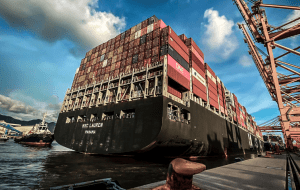
Mexico‘s manufacturing exports grew 4.8% from January to July 2024, to US$316,146.4 million. Mexico exports to the world mainly transportation equipment, computers, electronics, food, chemicals,

AB InBev has strengthened its global digital direct-to-consumer (DTC) platform in parallel with its Modelorama stores in Mexico. Its DTC system of digital and physical
Consumption of alcohol products has been driven by e-commerce in the home, according to LQR House Inc. This trend increased since the Covid-19 pandemic. Progressively,

Malt imports to Mexico grew 7.6% between 2022 and 2023, to US$452 million, according to data from the Ministry of Agriculture. Unlike malt used in

Grupo Embotelladoras PepsiCo (GEPP) had 129 operating lines at the end of 2023, an increase of three lines compared to 2022. At the same time,
The GDP of the beverage industry in Mexico grew at a real year-on-year rate of 4.5% in 2024, to Ps. 1.27 trillion, according to Inegi
FDI in machinery and equipment manufacturing in Mexico registers a downward trend in the last three years. After reaching a level of US$1.699 billion in
U.S. agribusiness leads in the contribution of value added in the sector in North America, as detailed in a report by the World Trade Organization
Brazil‘s manufacturing production has lost competitiveness in recent years, with declines in four of the last five years. In 2023, manufacturing output in this country
Mexican imports of fructose will fall at a 26% year-over-year rate in the 2024-2025 cycle, to 784,000 tons, according to projections by the U.S. Department
Mexico‘s manufacturing exports grew 4.8% from January to July 2024, to US$316,146.4 million. Mexico exports to the world mainly transportation equipment, computers, electronics, food, chemicals,
AB InBev has strengthened its global digital direct-to-consumer (DTC) platform in parallel with its Modelorama stores in Mexico. Its DTC system of digital and physical
Consumption of alcohol products has been driven by e-commerce in the home, according to LQR House Inc. This trend increased since the Covid-19 pandemic. Progressively,
Malt imports to Mexico grew 7.6% between 2022 and 2023, to US$452 million, according to data from the Ministry of Agriculture. Unlike malt used in
Grupo Embotelladoras PepsiCo (GEPP) had 129 operating lines at the end of 2023, an increase of three lines compared to 2022. At the same time,