
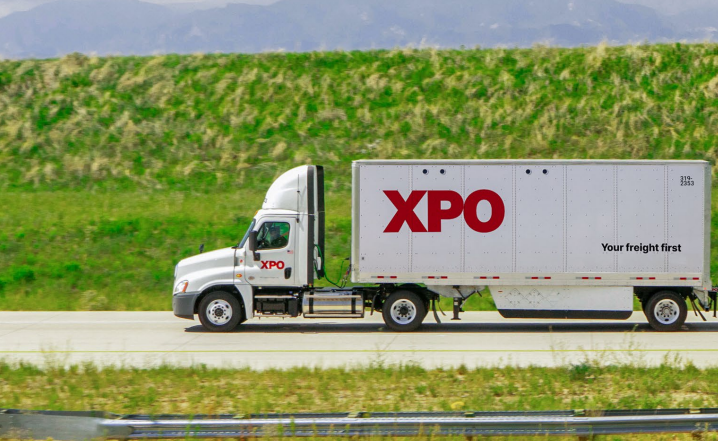
XPO’s share of consolidated freight transport in North America remained at 9% in 2025, unchanged from the previous two years.
This market share shows an upward trend: between 2020 and 2022, it accounted for 8% of the market.
XPO’s share
During 2025, the segment generated $4.832 billion. XPO maintained its solid 9% share in a US market valued at $53 billion, demonstrating remarkable resilience in the face of challenging economic conditions.
The execution of the LTL 2.0 plan was instrumental. This strategy prioritized service and network expansion. Since 2021, they have added 2,000 net doors, including the acquisition of twenty-eight Yellow centers in 2023, substantially strengthening their capacity.
The company‘s consolidated freight revenue in North America, in millions of dollars, is shown below:
- 2019: 3,791.
- 2020: 3,546.
- 2021: 4,125.
- 2022: 4,645.
- 2023: 4,671.
- 2024: 4,899.
- 2025: 4,832.
Artificial intelligence
XPO boosts its profitability through artificial intelligence applied to cargo flows and dynamic pricing. It currently maintains 30% excess capacity, allowing it to capture greater volume when the cycle improves and strengthen its operational positioning.
The consolidated freight segment, the core of its operation, groups shipments from multiple customers in the same vehicle. This scheme optimizes capacity, reduces unit costs, and improves delivery frequency, especially in regional and national networks.
In this context, palletized goods are key. They are grouped on pallets or platforms to facilitate handling, storage, and transport. This cargo unit allows large volumes to be moved with forklifts and optimizes the use of logistics space.
In addition, the company’s infrastructure covers 99% of zip codes in the United States and offers cross-border services. Since 2021, it has expanded its capacity with 2,000 additional net doors, strengthening its operational network.
At the same time, XPO implements AI-based line models. These tools reduce empty miles and increase labor productivity, consolidating a proprietary technology platform essential for pricing and operational efficiency.
Net income
XPO reported revenue of $8.157 billion in 2025, an annual increase of 1.1%. However, the recessionary environment in the freight sector limited organic growth, which remained virtually stagnant, while the increase was mainly due to favorable exchange rate fluctuations.
In contrast, net income fell 18.3% to $316 million. The decline was due to lower operating income and extraordinary charges, including a $35 million environmental contingency related to legacy assets, partially offset by solid returns.
XPO competes intensely in fragmented markets against leading companies such as Old Dominion Freight Line, Saia, and FedEx. This rivalry is based on quality, technology, and price, seeking to capitalize on fundamental secular trends such as logistics outsourcing and steady e-commerce growth.