
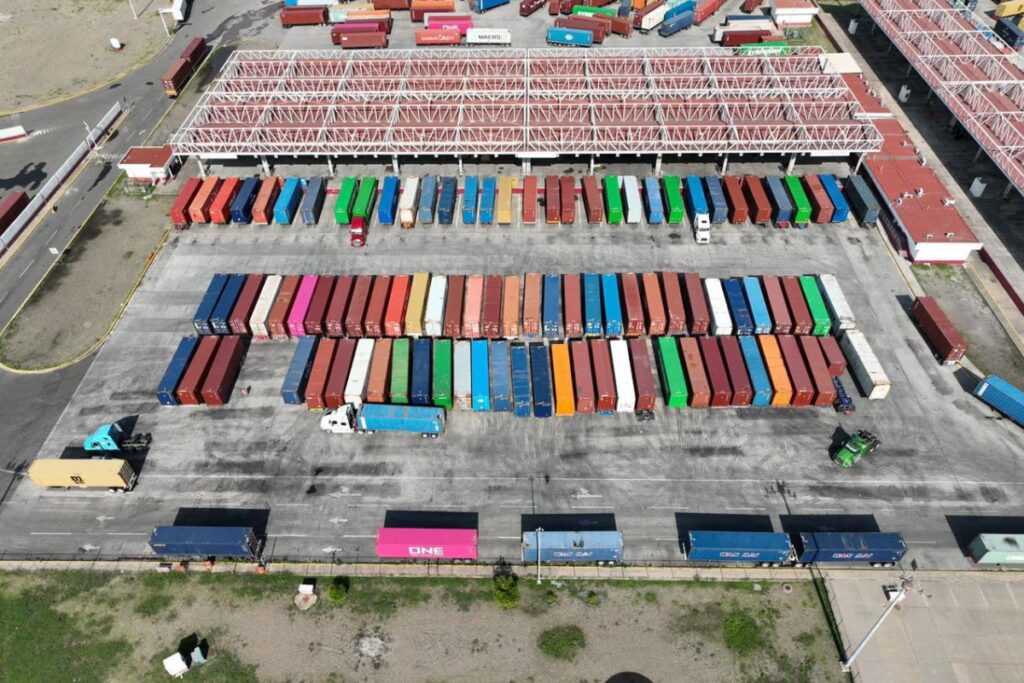
U.S. tariff policy toward Mexico is primarily governed by the USMCA and Sections 122, 232, and 301.
Mexico ranked as the United States’ top trading partner in goods in 2025. Trade flows of goods between the two countries reached $872.834 billion.
U.S. Tariff Policy
Mexico’s exports to the United States totaled $534.874 billion in 2025, up 5.8% from 2024. Meanwhile, Mexican imports from the United States rose 1.2% to $337.960 billion. This was reported by the Department of Commerce.
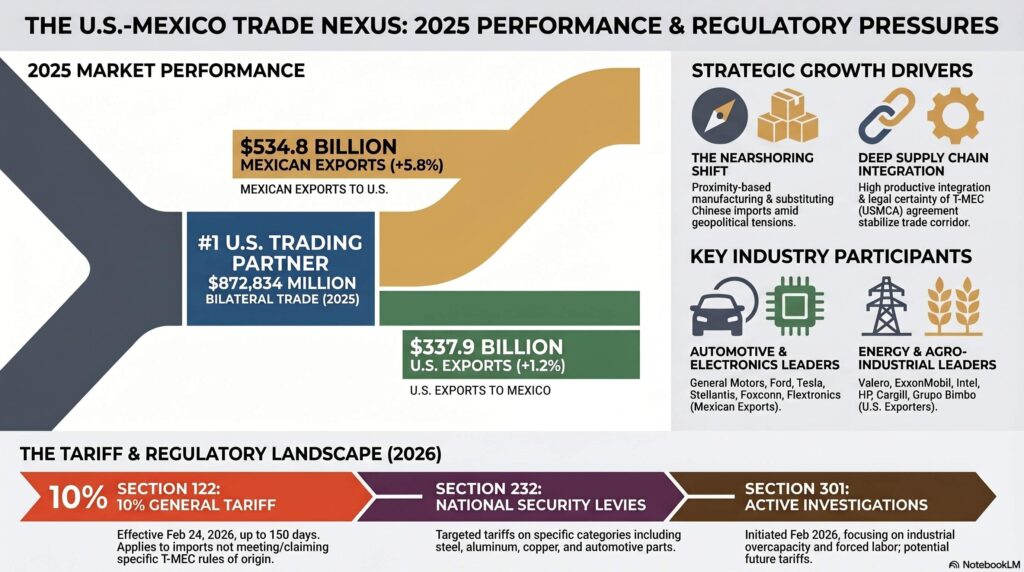
Mexico leads trade with the United States thanks to the legal certainty provided by the USMCA, the boost from nearshoring due to geographic proximity, the substitution of Chinese imports amid geopolitical tensions, and deep productive integration into global supply chains.
In bilateral trade from Mexico to the U.S. market, General Motors, Ford, Stellantis, and Tesla (automotive) stand out. Additionally, Foxconn and Flextronics (electronics) are prominent. Grupo Bimbo (food) is also significant. From the United States to the Mexican market, Valero and ExxonMobil (energy) lead the way. Joining them are tech giants such as Intel and HP, as well as agribusinesses like Cargill.
Tariffs vs. Free Trade
U.S. imports from Mexico are subject to a 10% tariff imposed under Section 122 of the Trade Act of 1974. This tariff has been in effect since February 24, 2026, for a maximum period of 150 days. However, there are exceptions for goods that meet the rules of origin requirements under the USMCA and that qualify for them.
Certain U.S. imports from Mexico are also subject to tariffs at various rates under Section 232 of the Trade Expansion Act of 1962. This includes imports of automobiles and auto parts, steel, aluminum, and copper.
In February 2026, the Administration initiated two investigations, pursuant to Section 301 of the Trade Act of 1974, regarding industrial overcapacity and the prohibition of imports of goods produced using forced labor, which could result in additional tariffs on imports from Mexico.