
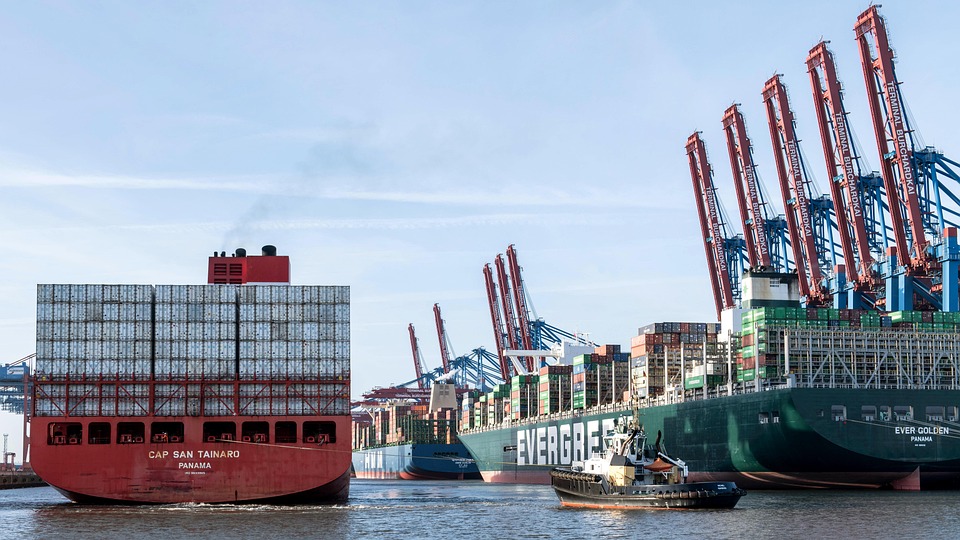
The US government has taken measures to combat the transshipment of products originating in China.
The transshipment of products refers to the transfer of goods under customs control from one means of transport to another or through an intermediate country, either to continue the logistics route or to preserve the goods in good condition. In this case, it is used to conceal the country of origin and evade tariffs or trade restrictions.
Transshipment of products
A study by Harvard Business School analyzed transaction data. It found that part of the jump in Vietnam’s exports to the United States was due to the diversion of Chinese goods. In addition, it documented rebranding practices that presented Chinese goods as manufactured in Vietnam.
Then the scenario changed. On April 2, 2025, President Trump applied a general tariff of 10% and set a rate of 46% for Vietnamese goods. He later adjusted the measure. On July 31, he reduced the specific tariff to 20% and imposed a 40% surcharge on goods transshipped to evade taxes.
Triangular trade
According to the US-China Economic and Security Review Commission, direct exports from China to North America declined in 2025. This occurred while Washington was imposing new tariffs. However, transshipment through third countries likely obscures the true volume of US imports from China.
The phenomenon is difficult to measure. Even so, the experience of 2018-2021 shows that its scale is significant. While US purchases of Chinese goods affected by Section 301 fell by 13 percent, imports of the same products from Vietnam and Mexico grew.
The Commission concluded that this change was partly due to sourcing from local suppliers or the relocation of manufacturing. In many cases, only the final assembly of Chinese inputs was moved. However, billions of dollars corresponded to Chinese goods that were redirected and relabeled to hide their true origin.