
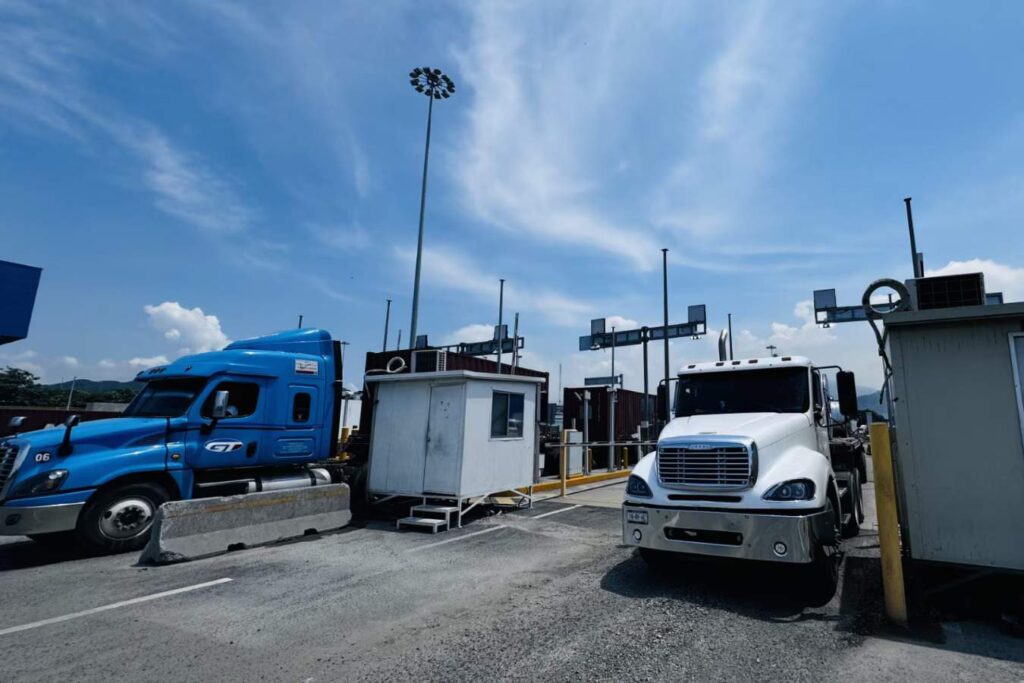
The selection process for customs agents has been inactive since 2023, despite recent license cancellations.
A customs agent is not a public official but a member of the private sector who assists the Mexican National Customs Agency (ANAM) in controlling the entry and exit of goods, as well as ensuring the proper payment of taxes and countervailing duties.
Selection of Customs Agents
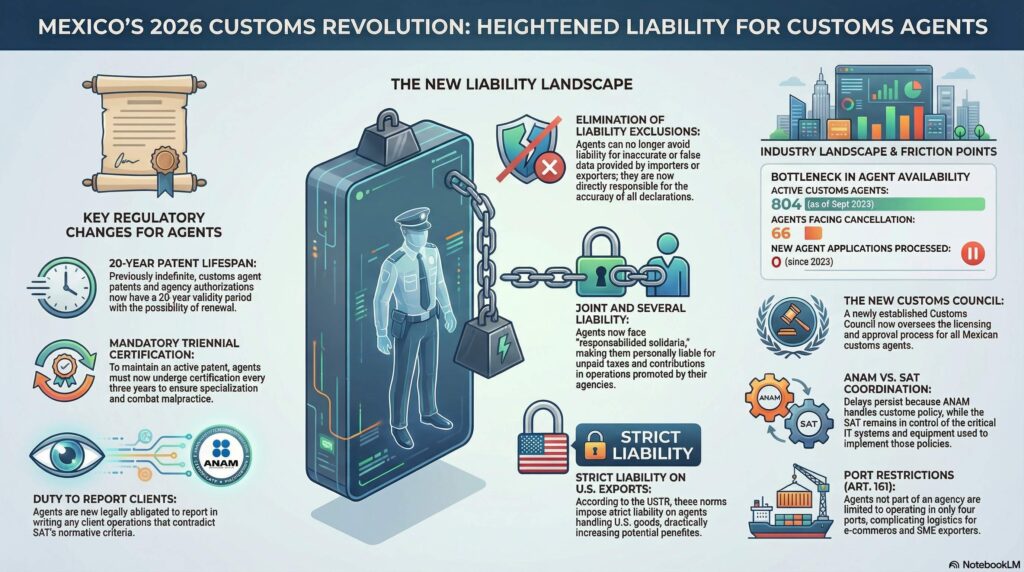
Recent amendments to the Customs Law were enacted in regulations published on December 27, 2025, and took effect on January 1, 2026.
According to the United States Trade Representative (USTR), opportunities to comment on proposed regulatory amendments are also often brief and inconsistent. This agency questioned whether all stakeholders have the opportunity to provide input. It added that when input is provided, its acceptance and use are inconsistent.
The January 1, 2026, regulations impose strict liability on customs brokers handling customs procedures for U.S. exports to Mexico. Much more information is required for each import transaction, while potential liability for penalties has increased dramatically. ANAM also has greater authority to detain and seize shipments.
Suspensions of Licenses
A significant number of Mexican customs brokers have been suspended over the past year. As of September 2025, 804 brokers were active, while 66 were facing revocation proceedings.
However, the application and review process for the approval of new customs brokers has not been open since 2023.
The new Customs Law establishes a new Customs Council to oversee the licensing and approval of Mexican customs brokers.
In this regard, the USTR indicated that the United States will monitor the implementation of the new council and the commencement of its activities. Some products still cannot be imported through all ports of entry. Restricting these products to certain ports has made it difficult for U.S. exporters to organize transportation and logistics, especially for e-commerce purchases from U.S. SME exporters.
Finally, the USMCA prohibits arbitrary limits on the number of ports at which a customs broker may operate. However, Article 161 of Mexico’s Customs Law limits a broker to operating at four ports if they are not part of a customs agency.
Customs Coordination
The United States is working diligently with Mexican authorities to ensure that customs agents who are part of an agency can use their tax identification to process shipments at more than four ports.
The Customs Agency is responsible for developing customs policies and procedures, but the IT systems and equipment that implement those policies remain the responsibility of the SAT. According to the USTR, coordination between the two entities is improving, but still presents challenges.