
For most observers, the annual review of the United States-Mexico-Canada Agreement (USMCA) is expected to center on familiar issues: tariffs, rules of origin, automotive content requirements, labor standards, dispute settlement, and market access.
Those issues unquestionably matter.
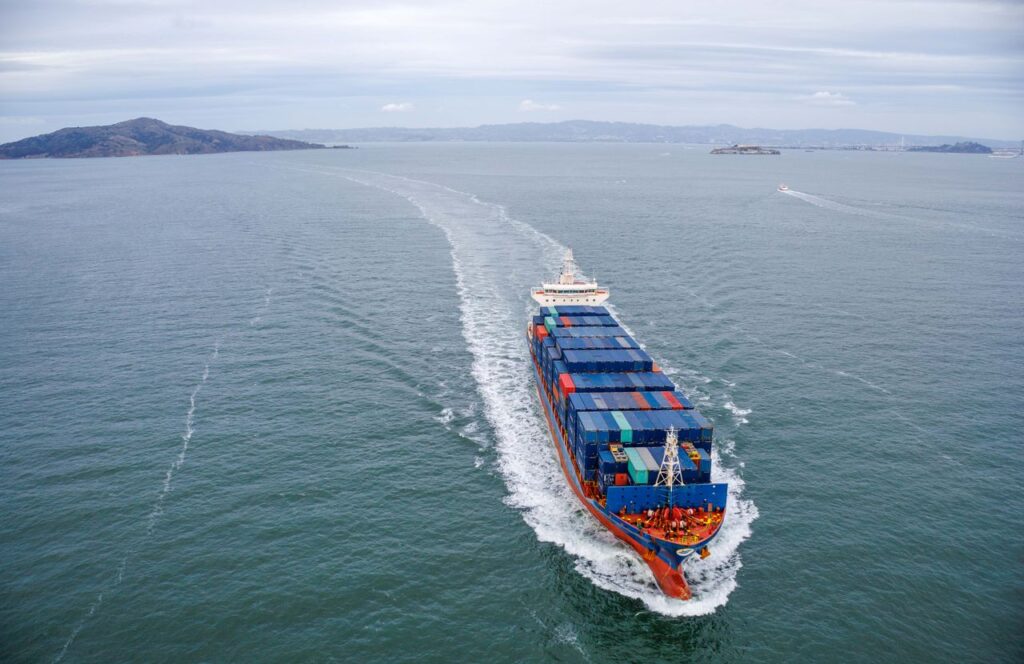
But if North America intends to remain one of the world’s most competitive production platforms, another strategic priority deserves far greater attention: maritime logistics.
Trade agreements provide legal certainty.
Supply chains provide operational certainty.
And increasingly, supply-chain resilience depends on maritime infrastructure.
North America’s future competitiveness will not be determined solely by what governments negotiate across conference tables. It will also depend on how efficiently cargo moves through ports, shipping corridors, intermodal terminals, customs systems, and coastal transportation networks.
Economic security begins at sea.
From Trade Agreement to Competitive Platform
The USMCA was negotiated primarily as a trade agreement.
Its next phase should recognize that North America is also an integrated production and logistics platform.
The region is more than a collection of manufacturing centers. It is a tightly connected network of factories, distribution hubs, railroads, highways, airports, inland terminals, and maritime gateways.
The disruptions of the COVID-19 pandemic made one lesson unmistakable: production is only as resilient as the logistics systems that support it.
Port congestion, container shortages, cyberattacks on maritime infrastructure, vessel delays, and disruptions along strategic waterways exposed vulnerabilities that traditional trade policy cannot address on its own.
The next stage of regional integration must therefore complement commercial rules with a clear strategy for logistics resilience.
Ports Are Strategic Infrastructure
Ports are still too often viewed simply as transportation facilities.
They are far more than that.
Modern ports are strategic assets where trade, security, technology, customs administration, energy, manufacturing, and digital infrastructure converge.
Every additional day a vessel waits raises costs across the regional economy.
Every customs delay weakens industrial competitiveness.
And every cybersecurity gap creates a potential point of failure in continental supply chains.
For deeply integrated industries—including automotive, electronics, aerospace, energy, and advanced manufacturing—port performance is now a core competitive variable, not merely a transportation concern.
The efficiency of North America’s maritime gateways increasingly shapes the efficiency of North American production itself.
Maritime Interoperability Matters
Competitiveness can no longer be measured port by port.
It depends on how effectively the regional maritime network operates as a whole.
North America should therefore pursue greater interoperability among its principal maritime gateways.
That objective extends well beyond digital compatibility.
It requires streamlined and better-coordinated customs procedures, secure data exchange, interoperable port community systems, robust cybersecurity standards, coordinated vessel traffic management, effective emergency-response capabilities, and resilient multimodal connections.
The goal is not institutional uniformity.
It is operational compatibility.
In highly integrated supply chains, a disruption at one port can quickly affect production across the continent.
Regional resilience depends on identifying and reducing those bottlenecks before they become systemic crises.
Short Sea Shipping Remains an Untapped Opportunity
Short sea shipping remains one of North America’s most underused competitive advantages.
Despite extensive coastlines along the Atlantic, Pacific, Gulf of Mexico, Arctic, and Great Lakes, a substantial share of regional freight still depends heavily on congested highways and border crossings.
Expanding coastal and short sea shipping would not replace trucking or rail.
It would complement them.
A more balanced freight system could reduce highway congestion, lower logistics costs, increase supply-chain redundancy, improve environmental performance, and provide additional capacity when land transportation is disrupted.
At a time of nearshoring, regionalization, and renewed industrial policy, maritime transportation should become an integral part of North America’s logistics strategy.
Economic Security Is Maritime Security
The meaning of economic security has expanded.
It now encompasses supply-chain resilience, critical-infrastructure protection, cybersecurity, strategic industries, energy security, and reliable transportation networks.
Maritime infrastructure sits at the center of each of these priorities.
Most global trade by volume still moves by sea.
Critical minerals, energy products, manufactured goods, food, and industrial components all depend on secure and reliable maritime transportation.
Strengthening maritime resilience should therefore be understood not only as transportation policy, but also as economic-security policy.
The USMCA review provides a timely opportunity to recognize that reality.
A Strategic Agenda for North America
Without reopening the agreement itself, the three countries could advance a complementary maritime competitiveness agenda focused on:
- stronger interoperability among ports and maritime gateways;
- coordinated digitalization of maritime and customs processes;
- enhanced cybersecurity for ports, terminals, and shipping networks;
- expanded short sea shipping and coastal freight services;
- greater resilience along strategic maritime corridors;
- deeper customs cooperation at maritime gateways; and
- coordinated investment in critical port and intermodal infrastructure.
None of these initiatives would require changing the fundamental architecture of the USMCA.
Each would make the agreement more effective in practice.
Looking Beyond the Negotiating Table
North America’s competitive advantage has always rested on more than the language of its trade agreements. It depends on infrastructure, institutions, investment, innovation, and the efficient movement of goods.
Trade agreements establish the rules. Logistics determines whether those rules translate into growth, resilience, and shared prosperity.
The annual review of the USMCA is therefore an opportunity to broaden the regional conversation—from market access alone to the physical and digital systems that make continental trade possible.
The future of North American integration will not be decided exclusively in negotiating rooms.
It will also be built in ports.
Because economic security begins at sea.
By Roberto Arriola García
About the Author
Roberto Arriola García is a maritime lawyer and ocean-governance specialist. He is the author of the Treatise on Mexican Maritime Law and founder of Latin American Maritime Law Studies (LAMLS). His work focuses on maritime legal modernization, port governance, logistics digitalization, ocean culture, and Mexico’s maritime development.