
By Roberto Arriola García | August 5th, 2026
Nearshoring confirmed Mexico’s structural advantages: proximity to the United States, a broad trade-agreement network, and an established manufacturing base. It also exposed bottlenecks. In a July 2024 Banco de México survey, 31.8% of firms identified electricity and water supply as constraints, while 30.7% cited transportation infrastructure. Land and incentives alone are not enough.
Port-Based Nearshoring
The answer should not be limited to expanding northern Mexico’s industrial-park model. Mexico needs a new generation of port-based industrial parks, designed from the outset as integrated energy, logistics, and production platforms. The Interoceanic Corridor of the Isthmus of Tehuantepec offers an exceptional opportunity to test that model.
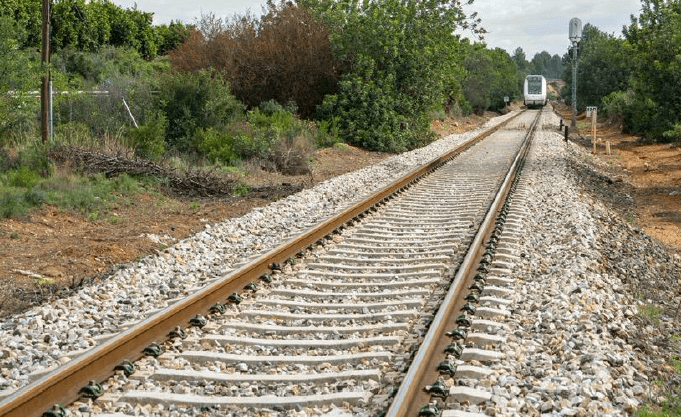
Salina Cruz and Coatzacoalcos are linked by the 308.5-kilometer Line Z and form part of a platform of ports and “Polos de Desarrollo para el Bienestar” (Development Poles for Well-Being). Through the lens of Maritime Centrality, the Corridor’s success should be measured not only by containers crossing the Isthmus, but by the industrial, technological, and workforce capabilities it organizes. Its greatest value will lie in transforming inputs and generating more domestic value.
Anchor Demand for Shipbuilding
Shipbuilding and ship repair are especially suited to this strategy. Mexico has coastlines on two oceans, merchant shipping, offshore oil operations, ports, maritime tourism, and public demand capable of serving as an anchor. Secretaría de Marina (SEMAR) operates ASTIMAR 1 in Salina Cruz and ASTIMAR 4 in Coatzacoalcos. At ASTIMAR 1, construction of the first of seven next-generation offshore patrol vessels began in December 2025. Petróleos Mexicanos (Pemex) plans to rehabilitate eight tankers to return all 16 vessels in its large-vessel fleet to service, in addition to 15 boats and 15 tugboats.
That demand should not be treated as isolated contracts, but as the foundation for a supplier-development policy. Multi-year procurement would allow firms to invest in workshops, certifications, engineering, specialized welding, marine electronics, and propulsion. Public demand should not replace the private market; it should give it initial scale, certainty, and time to mature. This requires a legal and institutional architecture: transparent procurement, technical standards, financing, technology transfer, permits, environmental assessment, and measurable domestic-content targets.
The second circle of demand includes merchant vessels, tugboats, dredgers, ferries, fishing vessels, and offshore units, together with cruise ships, tour boats, marinas, and yachts. Before offering incentives, Mexico should establish a public baseline: which services are purchased, where they are performed, how much value leaves the country, and which capabilities can be developed competitively.
Oceanic Imaginary and a 25-Year Strategy
Infrastructure, however, is not enough. A sustained shipbuilding policy also requires strengthening the Oceanic Imaginary: the shared framework through which a society perceives, values, and relates to the ocean. As long as Mexico sees ports only as gateways for imports and exports, and vessels as isolated purchases, it will be difficult to sustain the strategy. Maritime Centrality begins in the Oceanic Imaginary: recognizing the sea as part of national development turns geography into collective purpose, public budgets, and productive capacity.
Mexico’s National Maritime Policy sets a 2045 aspiration of consolidating a sustainable, competitive, and socially responsible shipbuilding industry. The strategy should advance in stages: expand repair and maintenance; manufacture components and service craft; build ferries, tugboats, dredgers, and recreational vessels; and progressively move into more complex merchant ships. A mature industry cannot be created within a single six-year federal administration. It requires continuity over 20 or 25 years.
National shipbuilding-industry development program
Energy is central. Each industrial pole needs binding commitments for electricity and water supply, waste treatment, digital connectivity, and rail and port access. Pemex’s Strategic Plan includes an interoceanic gas pipeline to Salina Cruz, another to supply the Coatzacoalcos II Development Pole, and a cogeneration plant in Salina Cruz with an estimated surplus of approximately 600 MW beginning in 2030. The opportunity exists, but energy availability must be contracted, transmitted, and guaranteed under sound technical, financial, environmental, and social criteria.
The next step should be a national shipbuilding-industry development program with a 25-year horizon, a multi-year demand portfolio, intersectoral coordination, financing, and targets for employment, certification, domestic content, and service exports. With port-based industrial parks, firm energy supply, and anchor demand from SEMAR and Pemex, Salina Cruz and Coatzacoalcos could become the two ends of an Isthmus shipbuilding cluster.
Mexico does not merely need to move more cargo between the Pacific and the Gulf of Mexico. It needs to produce more value on both sides of the Corridor. The next chapter of Mexican nearshoring can and should be built at the port.
About the AuthorRoberto Arriola García is a lawyer specializing in maritime law and ocean governance, founder of Latin American Maritime Law Studies (LAMLS), and author of Tratado de Derecho Marítimo Mexicano (Treatise on Mexican Maritime Law). |
Sources Consulted
- Banco de México, “Seguimiento de la percepción empresarial sobre el impacto y las perspectivas del proceso de relocalización en México”. Supports the percentages identifying electricity and water (31.8%) and transportation infrastructure (30.7%) as constraints on nearshoring.
- Proyectos México, “Corredor Interoceánico del Istmo de Tehuantepec” (reviewed August 2026). Confirms the 308.5 kilometers of Line Z and the integration of Salina Cruz, Coatzacoalcos, and the Polos de Desarrollo para el Bienestar.
- Secretaría de Marina, “El Poder Naval se fortalece con la Ceremonia de Puesta de Quilla de un Buque Patrulla Oceánica”. Confirms the start at ASTIMAR 1 of the first of seven next-generation offshore patrol vessels.
- Secretaría de Marina, capability sheets for ASTIMAR 1 and ASTIMAR 4. Support the presence of Navy-operated shipyards in Salina Cruz and Coatzacoalcos.
- Petróleos Mexicanos, Plan Estratégico para el fortalecimiento de Pemex 2025-2035. Supports the rehabilitation of eight tankers, the return to service of the large-vessel fleet, the boats and tugboats, the Isthmus gas pipelines, and the Salina Cruz cogeneration project.
- Diario Oficial de la Federación, “Política Nacional Marítima”. Supports the 2045 horizon for a sustainable, competitive, and socially responsible shipbuilding industry.
- Diario Oficial de la Federación, “Programa Sectorial de Marina 2025-2030”. Contains lines of action on shipyards, construction, repair, maintenance, certification, fleet renewal, and exports of shipbuilding services.
- LAMLS Analytical Framework v1.0 and LAMLS Key Concept 002 – Oceanic Imaginary, version 1.0 (August 2026). Support the five-level analytical structure, the application of Maritime Centrality, and the doctrinal integration of the Oceanic Imaginary.