
Mexico City fell four spots to 123rd place out of 148 cities in the 2026 Smart City Index.
Overall, the city has been on a downward trend since reaching 103rd place in 2020.
Compared to 2025, Mexico City fell four places in an evaluation of 146 cities.
Mexico City in the Smart City Index 2026
The capital’s overall rating fell from “C” in 2025 to “CC” in 2026, reflecting stagnation in public perception.
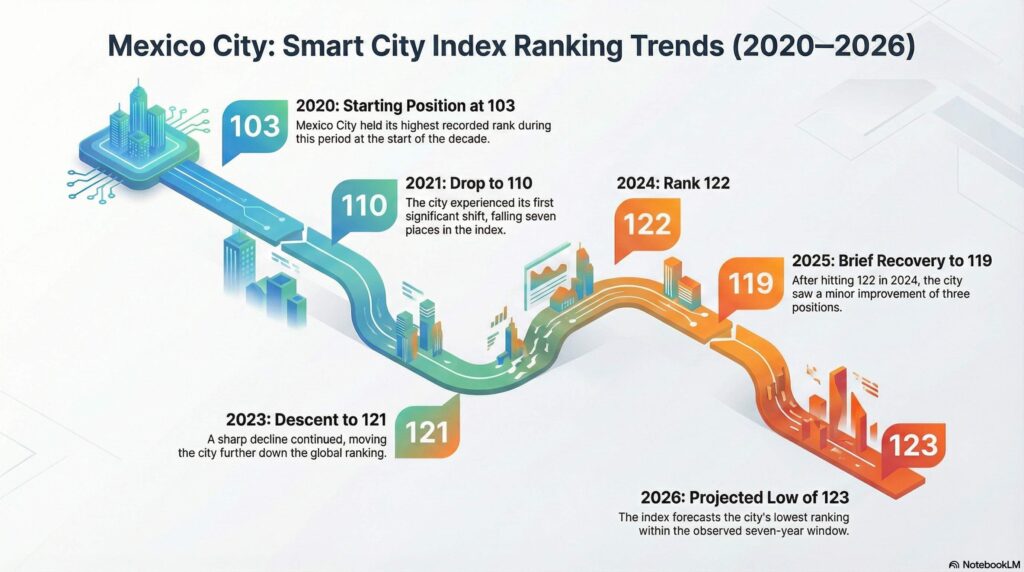
Despite efforts, the city has not managed to regain the competitiveness it demonstrated in previous years.
In the specific indicators by pillars, the city maintains a “CC” rating in both Infrastructure and Technology. However, the average for the technology factor (57.1) significantly exceeds the infrastructure average (44.7), highlighting a persistent gap.
Urban Structures: The Critical Point of Development
The Structures pillar reveals serious deficiencies in areas fundamental to quality of life. The lowest scores are concentrated in traffic congestion (24.2), public safety (24.3), and corruption (24.5)—factors that hinder progress toward becoming a smart city.
In contrast, recreational areas perform better within this pillar. Cultural activities and green spaces scored 73.0 and 64.0, respectively, making them the structural elements most highly rated by the capital’s residents.
Technology: Digital Strengths and Connectivity
Technology adoption presents a mixed picture with strengths in specific services. Online ticket purchases for museums (77.7) and reliable internet speed (69.1) stand out as the most efficient and highly valued digital services.
However, there are technological tools with low perceived impact, such as online access to city finances (39.1). This suggests that, although connectivity exists, its application to reduce corruption and improve governance is insufficient.
Citizen Priorities and Attitudes
For residents of the capital, safety is the top priority (84.7%), followed by transparency and health services (both at 58.9%). These concerns define the investment agenda needed to improve the city’s standing.
In terms of attitudes, 68.6% are willing to share personal data to improve traffic, and 62.9% accept facial recognition technologies. There is considerable social openness toward technological solutions that address the most urgent problems.