
The National Council of the Export Manufacturing Industry (Index) assessed the impact on Mexico of the United States‘ framework agreements.
Unlike the framework agreements with other Asian and Latin American countries, the US tariff agreement with South Korea sets an important precedent.
The reason: this is the first time that the US has modified the terms of an existing Free Trade Agreement (FTA) (Korus, approved by Congress in 2012) through a parallel instrument.
United States’ framework agreements
The agreement with South Korea establishes:
- A minimum tariff of 15% for goods originating in Korea, regardless of the FTA, unless the MFN tariff or the Korus tariff is higher.
- For cars, auto parts, wood, and wood products, a cap of 15% is set, partially softening the tariffs derived from Section 232.
- For steel, aluminum, and copper, there are no concessions: South Korea will continue to face the 50% tariff under Section 232.
- In exchange, South Korea commits more than $350 billion in strategic investment and shipbuilding, in addition to measures to monitor unfair practices.
Implications for Mexico
For Mexico, these agreements imply:
- Competitive pressure on consumer goods and light manufacturing, where Malaysia, Cambodia, Vietnam, and Thailand obtain regulatory advantages.
- Lower relative margins in certain sectors if the United States grants preferential access to countries outside the USMCA.
- Mexico maintains a structural advantage in goods that comply with the USMCA, especially in intermediate manufacturing, auto parts, electrical-electronics, and machinery, where it faces significantly lower weighted tariffs (5% vs. 15–35% for Asia).
In this context, the zero tariff granted to Mexico for the following goods is increasingly valuable:
- Not subject to Section 232 tariffs and complying with the USMCA rule of origin.
- Auto parts for cars and pickups.
- Auto parts for medium- and heavy-duty trucks.
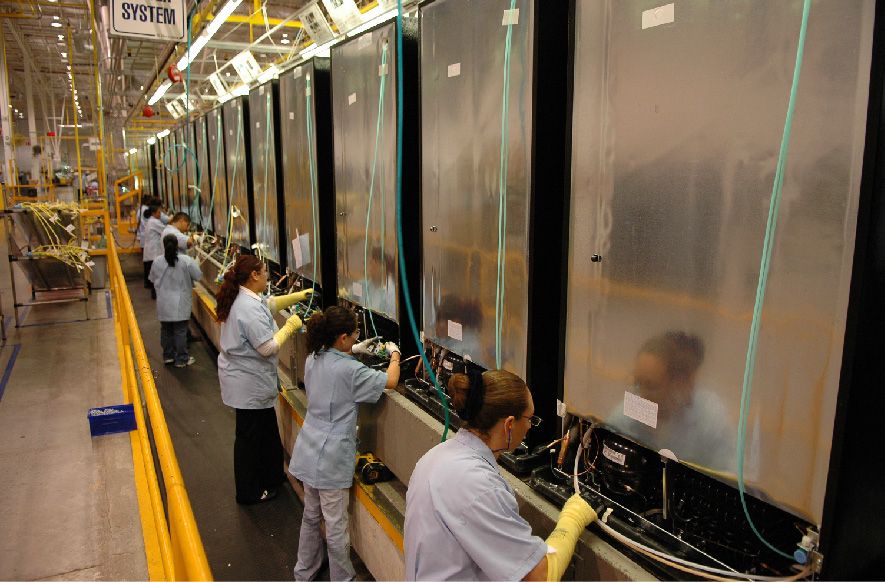
Imagen cortesía de Redacción Opportimes | Opportimes