
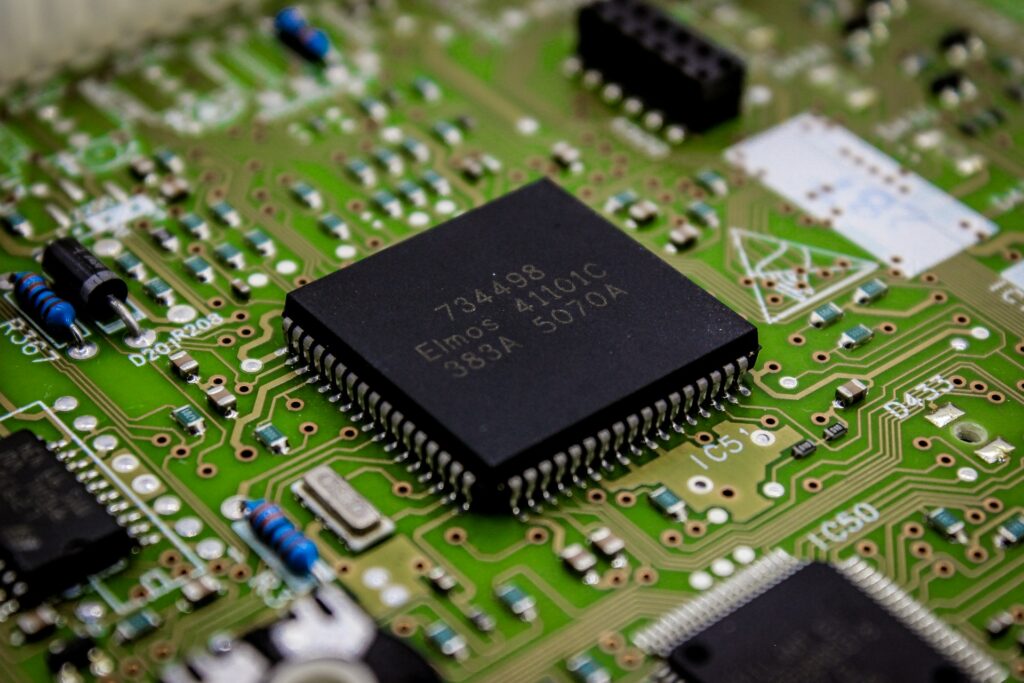
The semiconductor industry in the United States maintains a leading position despite its reliance on certain critical minerals and materials. Chips are the foundation of the global digital economy. This industry held a 53.4% market share of global semiconductor sales in 2025.
Therefore, the National Association of Manufacturers (NAM) believes that any U.S. policy intervention should be designed to maintain and strengthen this position.
Semiconductor industry in the United States
Exports remain a strategic pillar of the sector. In 2025, just over 70% of the U.S. semiconductor industry’s revenue came from sales to foreign customers, which has driven a U.S. trade surplus in semiconductors for nearly 30 years.
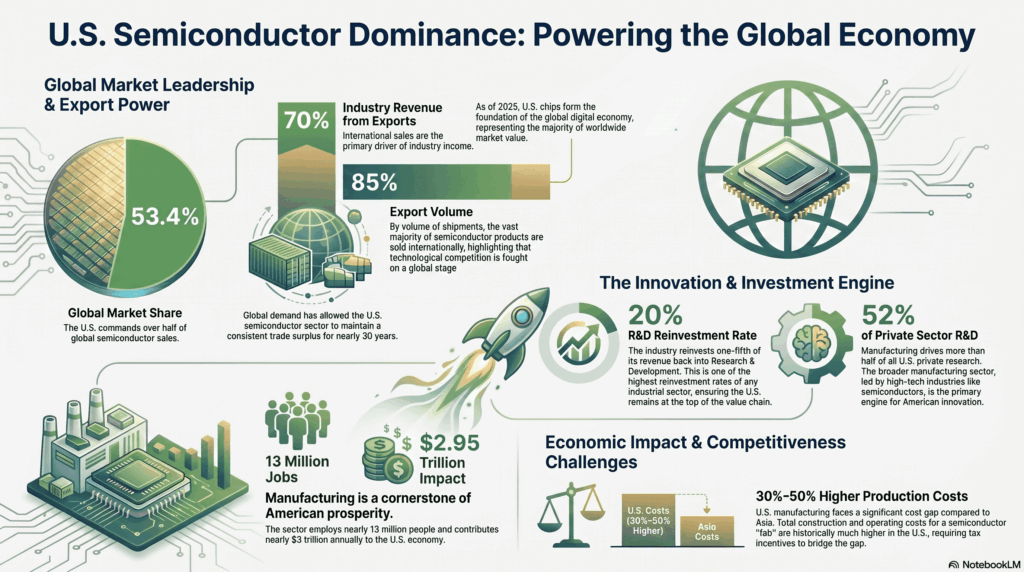
However, based on shipment volume, 85% of U.S.-based semiconductor sales are made in foreign markets. Technological competition is played out in international markets.
But NAM warned that without continued access to foreign markets and policy measures designed to boost demand for U.S. chips, U.S. goals to expand domestic capacity may not be economically viable.
Industrial Competitiveness
The NAM noted that the total costs of building and operating a semiconductor wafer fabrication plant (fab) in the United States have historically been 30 to 50 percent higher than in Asia. Advanced manufacturing requires investments in the billions of dollars. However, recent tax and other incentives have helped narrow the cost gap and should be maintained.
U.S. sales abroad further enable the U.S. semiconductor industry to reinvest an average of approximately 20% of its revenue in research and development (R&D), one of the highest rates of any sector. Innovation determines who leads the value chain.
NAM is the largest manufacturers’ association in the United States, representing manufacturers of all sizes, across all industrial sectors, and from all 50 states.
The manufacturing industry drives American prosperity and innovation: it employs nearly 13 million people, contributes $2.95 trillion annually to the U.S. economy, and accounts for nearly 52% of all private-sector research in the country.