
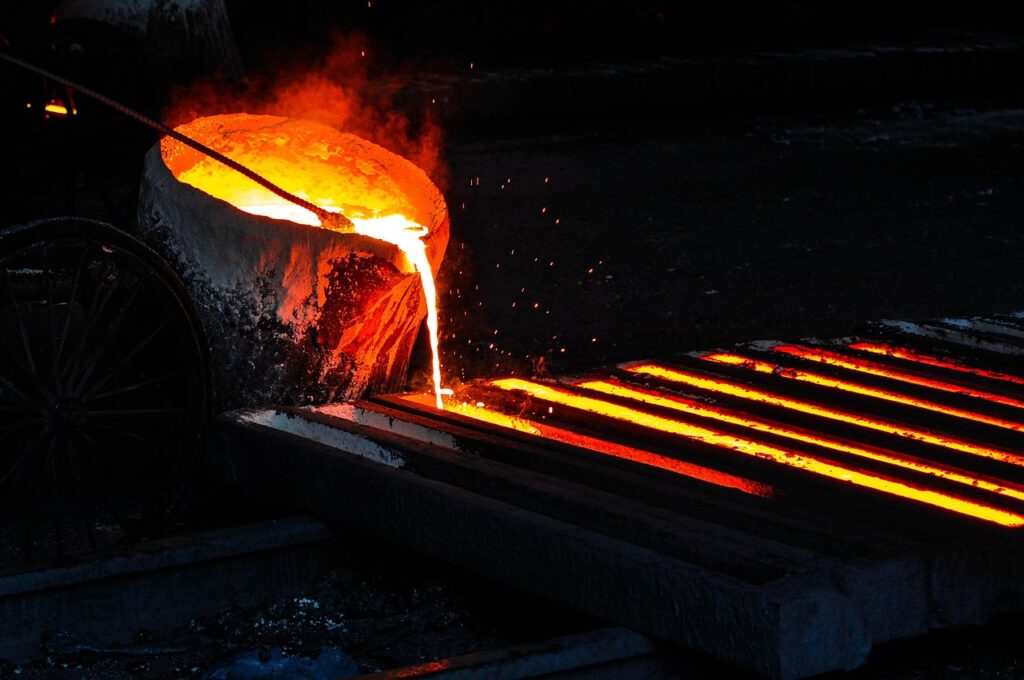
The Steel Manufacturers Association (SMA) of the United States has challenged restrictions on ferrous scrap exports in Mexico, China, and the European Union.
According to its own description, the SMA is the largest trade association in the U.S. steel industry in terms of steel-producing members and steel production capacity. It also leads in steel production, capital expenditures, and total employment.
Ferrous Scrap Exports
In general, export restrictions imposed by other countries directly and indirectly harm U.S. manufacturers.
For example, according to the SMA, Indonesia has imposed numerous restrictions on the export of various raw materials important for steel production, including nickel.
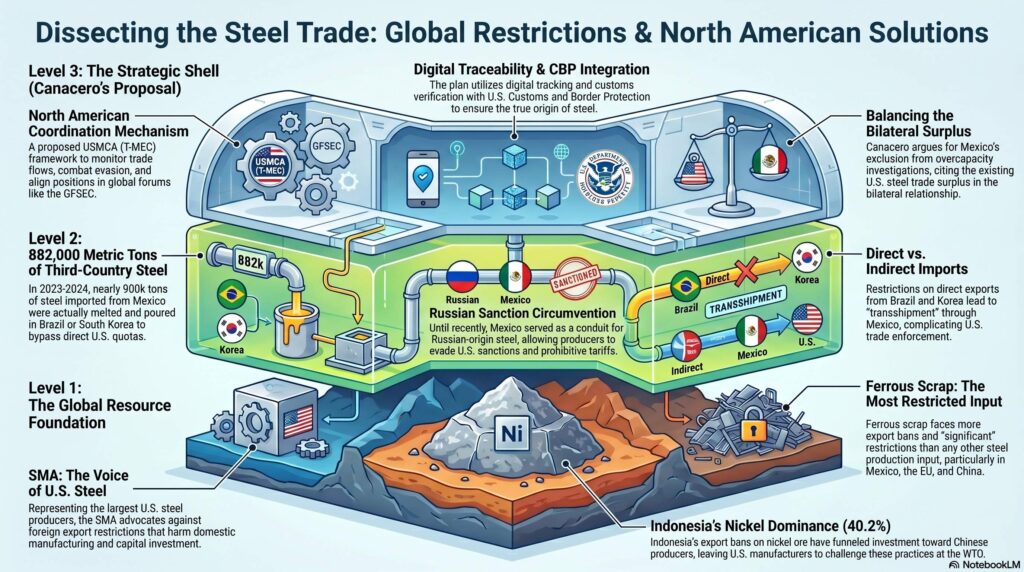
Indonesian nickel production, which accounts for more than 40.2% of global nickel, has attracted foreign investment. Conversely, this has been to the detriment of U.S. manufacturers.
Furthermore, the SMA stated that Chinese steel producers have benefited from investment in the Indonesian nickel industry. Meanwhile, the United States and other global steel producers have had to contend with export restrictions, such as the 2020 ban on nickel ore exports. They have challenged these measures before the WTO.
At the same time, steel scrap is subject to more export restrictions than any other input used in steel production. In addition, several countries have imposed a total ban on scrap exports. And the SMA noted that Mexico, the European Union, and China “significantly” restrict exports of ferrous scrap.
Mexican Production
According to the Department of Commerce’s smelting and casting data panel, approximately 882,000 metric tons of U.S. imports of steel products from Mexico in 2023 and 2024 were produced from steel smelted and cast in third countries.
Most of this was smelted and cast in Brazil or Korea, countries subject to quota limits that prevented direct exports to the United States. Furthermore, until recently and according to the SMA, Mexico served as a conduit to the U.S. market for steel products smelted and cast in Russia. This allowed Russian producers to circumvent U.S. sanctions and prohibitive tariffs.
Canacero’s Position
Canacero proposed to the USTR the creation of a North American steel coordination mechanism within the USMCA to monitor trade flows, combat circumvention, and align positions in forums such as the GFSEC.
The agreement provides for customs cooperation, origin verification, and the use of digital traceability with CBP. It also aims to avoid unilateral measures and exclude Mexico from investigations into overcapacity, given the U.S. steel surplus in the bilateral relationship.