
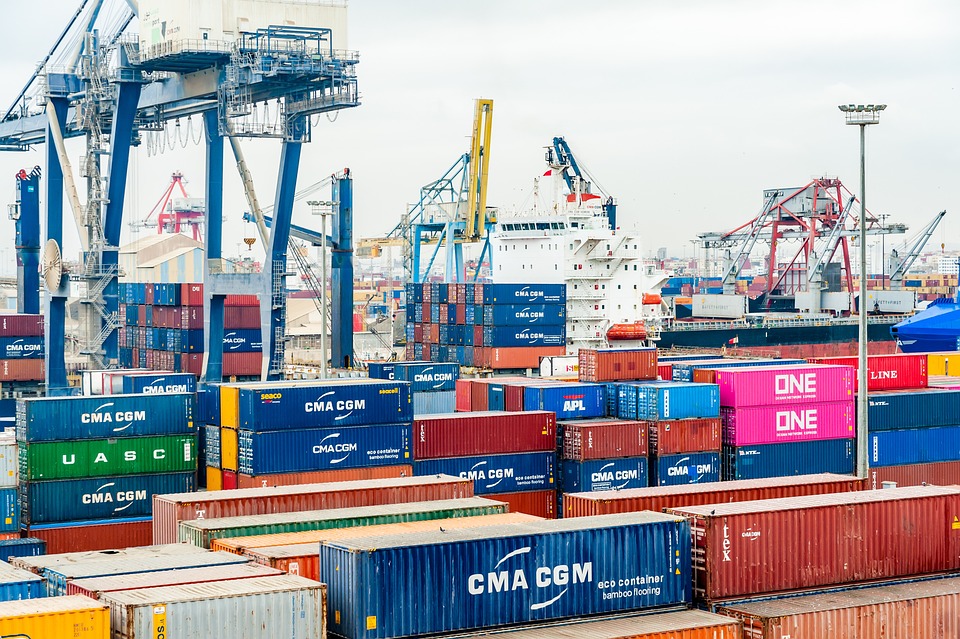
China’s imports from the world fell 0.3% year-on-year in 2025, to $2.58 trillion, after reaching a historic high of $2.71 trillion in 2022. The decline confirms the loss of momentum of Asia’s largest importer and limits its role as an engine of global growth and foreign trade.
The data reflects a volatile trajectory during the 2020s. And the slowdown impacts supply chains, foreign direct investment flows, and nearshoring strategies. For exporters and foreign trade managers, the central question is clear: can China rebalance its model toward greater domestic consumption?
Foreign trade reconfiguration and geopolitical tensions
In its 2025 National Security Strategy, the White House reiterated that “America First” diplomacy seeks to rebalance trade relations. The document argues that the US current account deficit is unsustainable and that strategic allies must adjust trade policies in the face of Chinese overcapacity.
This environment conditions China’s imports from the world and increases regulatory uncertainty.
“We must encourage Europe, Japan, Korea, Australia, Canada, Mexico, and other prominent nations to adopt trade policies that help rebalance the Chinese economy toward domestic consumption, as Southeast Asia, Latin America, and the Middle East cannot absorb China’s enormous excess capacity on their own,” says the White House.
The US government adds that exporting nations in Europe and Asia may also view middle-income countries as a limited but growing market for their exports.
Sectors with the greatest contraction
Mineral fuels and oils totaled $442.947 billion, down 12.01%. The automotive sector (including other vehicles in Chapter 87) fell 33.44% to $41.448 billion. Likewise, purchases from the United States fell by 14.52%, while those from Malaysia fell by 20.51%.
These figures reveal significant sectoral adjustments. Weakening industrial and energy demand is putting pressure on global exporters. It is also reshaping growth expectations for economies dependent on raw materials and intermediate manufacturing.
Technology and machinery show resilience
In contrast, electrical machinery totaled $626.969 billion, an increase of 7.17%. Reactors and mechanical machinery grew 9.47% to $251.242 billion. Shipments from Chinese Taipei increased 5.95% and those from the Republic of Korea 2.98%.
This behavior confirms that technological demand remains relatively strong. Electronic components and strategic capital goods account for part of China’s imports from the rest of the world, in line with industrial modernization and the transition to higher value-added manufacturing.
Strategic implications for exporters and investors
The stagnation of China’s imports from the rest of the world reduces external momentum for Latin America, Southeast Asia, and exporting European economies. For companies with exposure to this market, geographic diversification and the strengthening of trade agreements become priorities.
In terms of trade policy, the adjustment opens up space for economies integrated with North America to attract foreign direct investment under nearshoring schemes. However, regulatory volatility and geopolitical tensions will continue to influence strategic decision-making.