
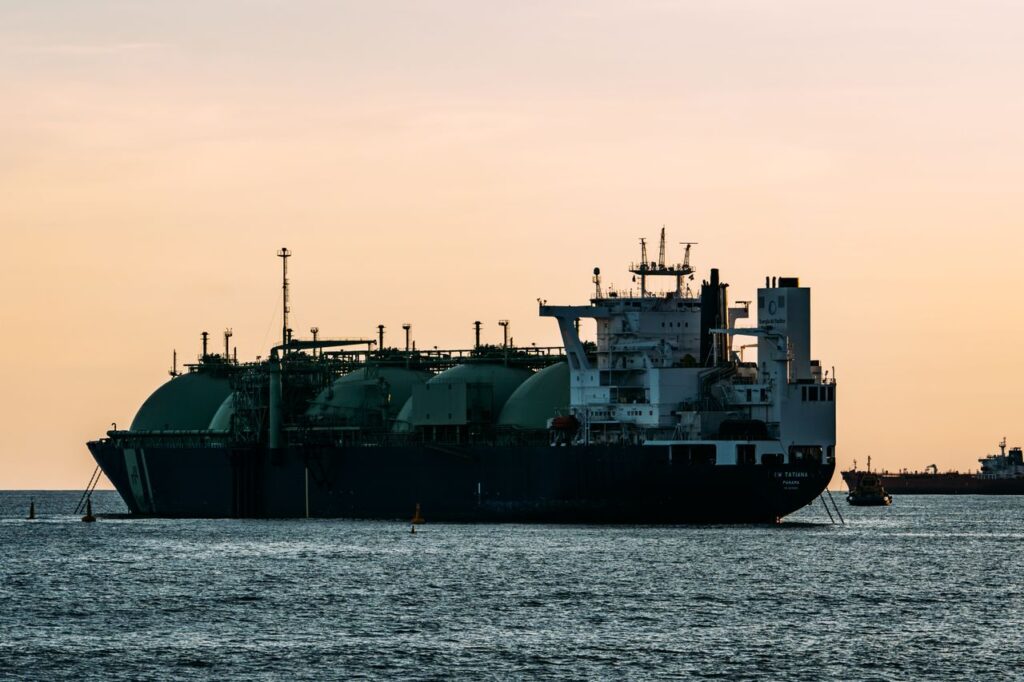
AfD (Alternative for Germany), the far-right party victorious in Saxony-Anhalt, could eventually reshape liquefied natural gas (LNG) trade through its push for renewed Russian pipeline supplies. For exporters, shipowners and terminal investors, the immediate issue is political uncertainty. A Russian pipeline revival would require federal decisions, European legal changes and viable infrastructure.
Preliminary results from the 6 September 2026 election gave AfD 43.8 percent of the vote and 39 of 83 state parliamentary seats. Government formation remained unresolved on 7 September. AfD is seeking parliamentary backing, while the Sahra Wagenknecht Alliance has signalled openness to cooperation. Chancellor Friedrich Merz rejected cooperation with AfD, whose leadership presents Saxony-Anhalt as a step towards federal power.
AfD: Reshape Global LNG Trade
Berlin and Mecklenburg-Western Pomerania vote on 20 September 2026. In 2027, Schleswig-Holstein and Saarland vote on 18 April, North Rhine-Westphalia on 25 April, Bremen on 30 May and Lower Saxony on 26 September. Bavaria and Hesse are expected to vote in autumn 2028.
State elections can reshape the Bundesrat, where state governments participate in federal lawmaking. Further AfD advances could strengthen its influence there and pressure Berlin, depending on government formation and coalition agreements. They do not change seats in the Bundestag, Germany’s elected federal parliament, which chooses the chancellor.
The Bundesrat cannot call early federal elections. These require presidential dissolution under constitutional procedures. One route involves a failed confidence vote initiated by the chancellor, followed by the chancellor’s request for dissolution. The president retains discretion. The next regular federal election is expected in spring 2029.
AfD advocates restoring Nord Stream operations, but a regional government cannot authorise Germany’s return to Russian supplies. European Union (EU) legislation phases out Russian gas imports during 2026 and 2027, while separate sanctions restrict Nord Stream transactions. Federal control would not automatically remove those constraints.
Russian pipeline
The commercial exposure spans liquefaction plants, specialised vessels, ports, storage facilities, inland pipelines and regasification terminals that convert LNG back into gas. Germany’s regulator, citing industry data, reports that approximately 96 percent of German LNG imports originated in the United States in 2025. Flows through German LNG terminals represented 10.3 percent of total German gas imports.
If substantial Russian pipeline deliveries resumed, European buyers could reduce purchases of competing LNG. Terminals might receive fewer cargoes, affecting unloading schedules and maritime services. Supply contracts, capacity reservations and payment obligations would shape adjustment. Cheaper gas could also stimulate industrial consumption, limiting LNG displacement. Price effects would depend on global supply, Asian demand and the volumes actually returning through pipelines.
For shipowners, fewer European arrivals would not necessarily reduce global transport demand. An Atlantic cargo redirected towards Asia could occupy a vessel for longer. Freight outcomes would depend on voyage distances, canal access and fleet availability. Traders would reassess destinations, delivery costs and margins.
Germany’s energy security
Terminal investors could face weaker throughput and revenues, although spare capacity retains strategic value during disruptions. Political uncertainty could affect financing and investment before cargo flows change.
Germany’s energy security depends on coordination between ports, pipelines, investment decisions and international commitments. A change of supplier would therefore test both energy policy and the state’s capacity to sustain reliable maritime connections. Infrastructure choices would need to remain compatible with existing commercial obligations and security partnerships.
A federal AfD government could turn energy purchasing into an institutional confrontation. Its 2025 programme seeks to replace the EU with a looser association of sovereign European nations. Prioritising national interests through bilateral Russian energy deals could fracture common policies; institutional rupture remains a contingent scenario.
AfD’s programme retains membership of the North Atlantic Treaty Organization (NATO) pending an effective independent European military alliance; its parliamentary group reaffirmed collective defence in July 2026. Nevertheless, subordinating allied commitments to bargains with Moscow could weaken deterrence, support for Ukraine and transatlantic trust before any formal withdrawal.
Washington would confront overlapping commercial and security interests. Renewed Russian supplies could challenge US LNG exporters, while disputes over sanctions could strain defence cooperation. Energy contracts could become bargaining instruments in Germany’s relationship with the United States.
AfD could reshape LNG trade if regional momentum translates into federal authority and changes to Europe’s energy framework. Businesses should watch coalition formation, sanctions and supply commitments: these will determine whether political ambition becomes a different map of maritime trade.