
Consumer habits are changing. Shoppers around the world are moving away from cheap, throwaway products and spending more on items that feel meaningful, last longer, and bring real enjoyment. Two categories show this shift very clearly: interactive DIY craft kits and premium sensory squeeze toys.
Quick answer: Interactive DIY crafts and premium sensory squishy toys are rising globally because consumers now prefer quality, experience, and wellbeing over disposable novelty items. Food-grade silicone toys offer durability and a better feel, all-in-one DIY kits turn making into a fun home activity, and brands that meet safety standards such as CPSIA, ASTM, and CE build stronger trust in global markets.
In this article, we analyze the market shift toward artisan collectibles, the rise of the at-home «maker economy,» how safety compliance creates a competitive advantage, and what the future holds for the tactile wellness industry.
Market Shift: Consumers Trade Disposable Novelties for Artisan Collectibles
For years, the toy and novelty market was driven by low prices and fast trends. Many products were made cheaply, used briefly, and thrown away. In 2026, that model is under pressure.
What is changing
- Value over volume: Shoppers prefer fewer, better items.
- Sustainability concerns: People are more aware of waste.
- Experience matters: Consumers want products that feel good to use, not just to own.
- Wellness focus: Products that support calm and mental wellbeing are growing.
- Social discovery: Short videos showcase product quality and texture, which helps premium items stand out.
From novelty to collectible
Squeeze toys are a clear example. Early versions were mostly cheap foam toys sold as short-term novelties. Today, many buyers look for premium, collectible pieces made from better materials, with careful design and limited editions.
| Disposable novelty | Artisan collectible |
|---|---|
| Low price, low quality | Higher price, higher quality |
| Short life | Long-lasting |
| Bought on impulse | Bought with intent |
| Thrown away | Displayed and collected |
| Generic designs | Unique, detailed designs |
The material difference
Global demand for high-quality, food-grade silicone squishy toys has grown quickly as consumers learn the difference between premium and cheap materials. Silicone offers a smooth, soft feel, a satisfying slow rebound, easy cleaning, and much better durability than many foam alternatives. These qualities turn a simple toy into something people keep, collect, and recommend.
The «Maker Economy» at Home: Why All-in-One DIY Craft Kits Are Booming
The maker economy describes the growing number of people who enjoy making things themselves, from home baking to crafts and small creative projects. More of this activity now happens at home.
Why DIY kits are booming
- Screen breaks: Families want hands-on activities away from screens.
- Learning value: Crafts teach patience, measuring, and creativity.
- Shareable results: Finished projects look great on social media.
- Convenience: All-in-one kits remove the need to buy separate supplies.
- Personal meaning: Handmade items feel special.
What makes a successful DIY kit
- Everything included: Materials, tools, and instructions in one box.
- Simple steps: Easy enough for beginners and families.
- Safe materials: Especially important for children.
- A satisfying result: Something useful or fun at the end.
- Room for creativity: Colours and designs people can customize.
A case study in at-home making
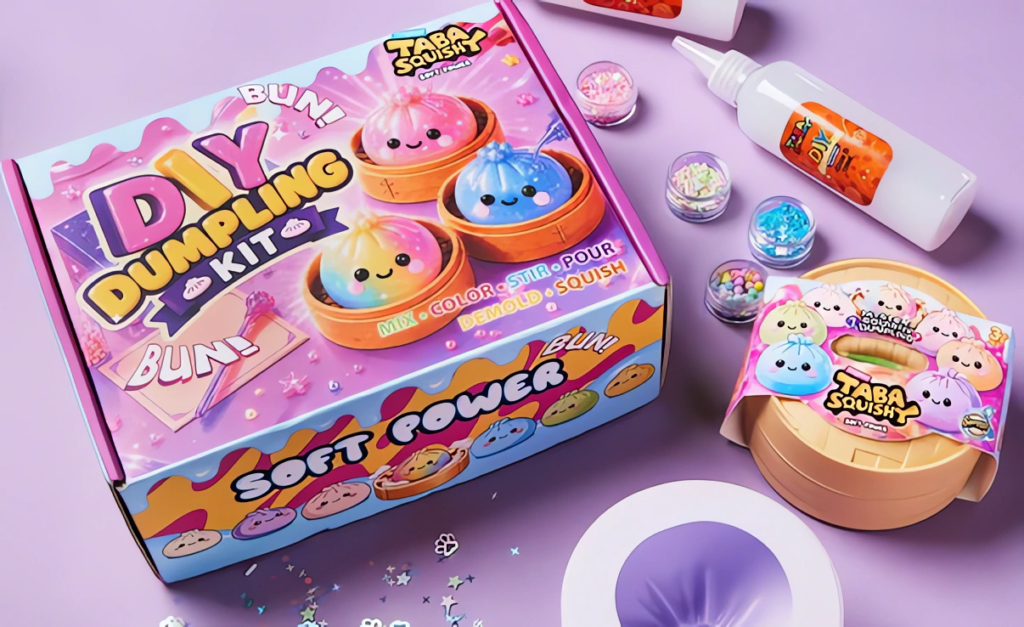
The diy dumpling squishy kit shows why this category is growing so fast. It combines a popular viral design, the dumpling squeeze toy, with the fun of making it yourself. Buyers get the materials and a dumpling mould, mix and colour the silicone, and end up with a handmade squishy. It turns a product people already love into an activity and an experience, which is exactly what modern consumers are looking for.
| DIY kit benefit | Consumer value |
|---|---|
| Hands-on activity | Screen-free time |
| Creative choices | Personal expression |
| Finished product | Something to keep or gift |
| Shareable process | Social media content |
| Family friendly | Shared experience |
Safety Compliance (CPSIA, ASTM & CE) as a Competitive Moat
As the market grows, so does the number of low-cost copies. In this environment, safety compliance is becoming a major advantage for serious brands.
Key safety standards
- CPSIA (United States): The Consumer Product Safety Improvement Act sets limits on lead and certain chemicals in children’s products and requires testing and certification for products made for children.
- ASTM F963 (United States): The standard consumer safety specification for toy safety, covering areas like physical and mechanical hazards and certain materials.
- CE marking (European Union): Shows that a product meets EU safety requirements, including the Toy Safety Directive for toys.
Why compliance is a «moat»
A competitive moat is an advantage that is hard for competitors to copy. Safety compliance works this way because:
- It takes time and investment. Testing, documentation, and quality control are not cheap or fast.
- It builds trust. Parents and retailers prefer brands that can show compliance.
- It opens markets. Meeting standards makes it easier to sell across regions.
- It reduces risk. Fewer recalls, complaints, and returns.
- It separates real brands from copies. Many low-cost copies cannot show the same level of compliance.
| Without clear compliance | With clear compliance |
|---|---|
| Limited market access | Wider global access |
| Low buyer trust | High buyer trust |
| Higher risk of recalls | Lower risk |
| Hard to compete on quality | Strong quality position |
Future Outlook for the Tactile Wellness Industry
The tactile wellness industry, which includes sensory toys, fidget tools, and calming tactile products, is likely to keep growing. Here is what to watch.
Trends to watch
- Adult buyers: More adults buy sensory tools for desks and self-care.
- Collectible series: Limited drops and rarity will keep collectors engaged.
- DIY and personalization: Custom and make-your-own products will grow.
- Safer materials: Food-grade and low-odour materials will become expected, not optional.
- Direct-to-consumer growth: Brands will sell more through their own stores and social channels.
- Global expansion: Compliance-ready brands will expand into new markets.
Challenges ahead
- Fighting copies and fake products
- Keeping quality high while scaling production
- Staying fresh as trends change quickly
The big picture
The tactile wellness market is moving from a novelty category to a lasting lifestyle category. Brands that focus on quality, safety, creativity, and community are best placed to lead it.
Key Takeaways
- Consumers are trading disposable novelties for quality, long-lasting artisan collectibles.
- Food-grade silicone squeeze toys stand out for feel, durability, and easy cleaning.
- All-in-one DIY kits are booming as part of the at-home maker economy.
- Safety compliance with CPSIA, ASTM, and CE builds trust and creates a competitive moat.
- The tactile wellness industry is shifting from novelty to long-term lifestyle category.
Frequently Asked Questions
Why are squishy toys so popular in 2026?
They combine satisfying textures, cute designs, collectible series, and stress relief, and they spread quickly through social media.
What is the maker economy?
The maker economy describes the growing trend of people making things themselves, such as crafts, food, and small creative projects, often at home.
What safety standards apply to toys?
In the US, CPSIA and ASTM F963 are key toy safety standards. In the EU, toys need CE marking to show they meet safety requirements.
Are DIY squishy kits good for kids?
Yes, when they use child-friendly, food-grade materials and are done with adult supervision. They are a fun, hands-on creative activity.
Final Thoughts
The rise of DIY crafts and premium sensory toys shows a clear shift in what consumers value. People want products that last, feel good, support wellbeing, and give them a chance to create. Brands that combine quality materials, safety compliance, and engaging experiences are well placed to lead the next stage of this fast-growing global market.