
The Mexican Automotive Industry Association (AMIA) proposed the creation of a T-MEC rules of origin audit manual.
This proposal was submitted to the U.S. International Trade Commission (USITC) in a letter sent this month.
USMCA Rules of Origin Audit Manual
For AMIA, the development of this manual is strategic for strengthening regional production. In this regard, its proposal focuses on the joint development of a trilateral audit manual that optimizes origin verifications.
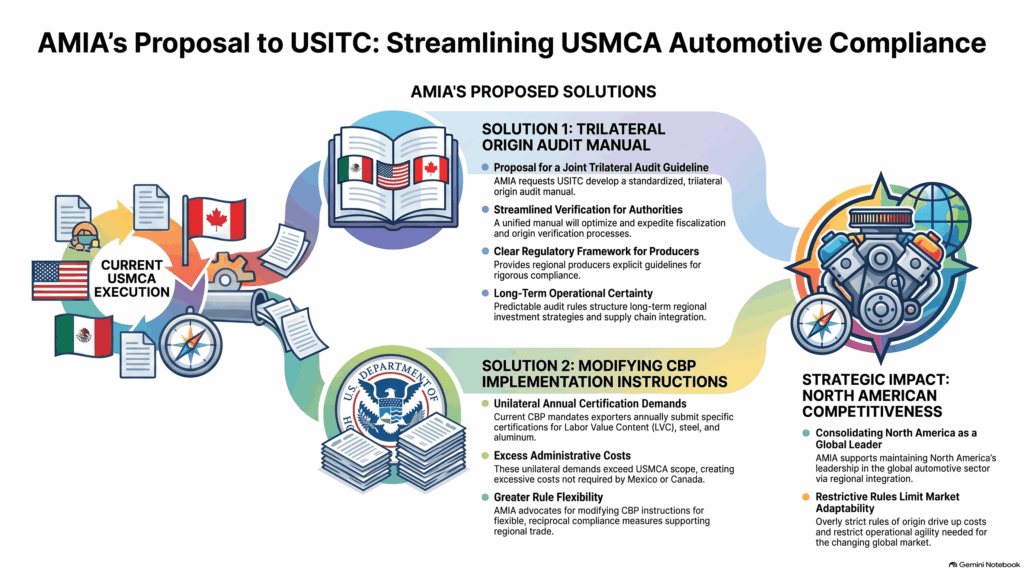
The implementation of this tool will streamline the inspection processes carried out by the competent authorities. It will also provide a clear regulatory framework for producers to strictly comply with current rules of origin. Finally, this operational certainty will provide the predictability needed to structure long-term investment strategies within the region.
“We believe that the development of a trilateral guideline will contribute to greater integration of regional supply chains, increasing competitiveness and certainty for producers in the region,” said AMIA.
Value-Added Content
In addition, AMIA proposed modifying the U.S. Customs and Border Protection (CBP) implementation instructions to make them more flexible for regional producers.
Currently, these instructions impose a unilateral obligation on Mexican and Canadian exporters to submit specific annual certifications regarding Labor Value Content, as well as steel and aluminum. This creates excessive administrative burdens and costs. According to AMIA, this is not required by the other two countries and goes beyond the scope of the agreement.
Regional Competitiveness
AMIA fully supports the shared commitment to consolidate North America’s position as a global leader in the automotive industry.
From its perspective, the successful integration process has ensured that the region remains competitive in a changing international landscape. However, the operational flexibility achieved through this integration is severely limited by overly strict rules of origin.
These rules drive up costs, increase administrative burdens, and restrict the adaptability needed to compete in a rapidly evolving global market.