
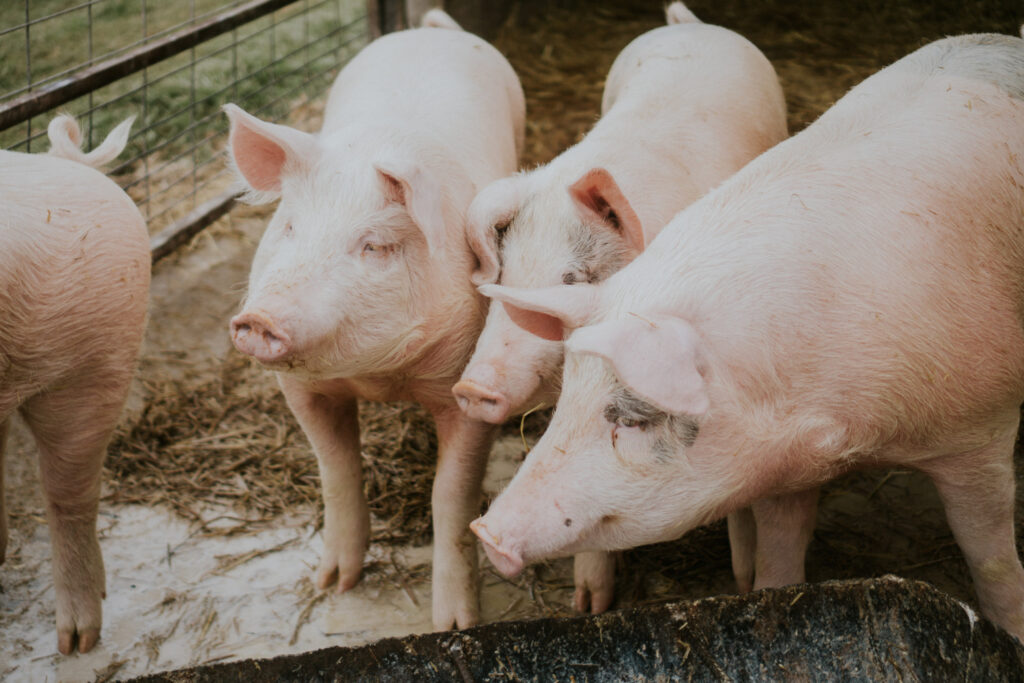
The pork tariffs imposed by China on the United States have primarily impacted shipments of offal, for which China has no alternative markets.
In retaliation for the U.S. Section 232 tariffs on steel and aluminum imposed in 2018, China continues to impose an additional 25% tariff on pork and pork offal from the United States.
U.S. beef and pork also remain subject to an additional “reciprocal” 10% tariff, a remnant of the sharp tariff escalation that occurred in the spring of 2025.
Pork Tariffs
Since March 2020, exemptions from China’s Section 301 retaliatory tariffs have been granted through an application process for importers. The November 2025 agreement extended these exemptions through the end of 2026.

If the extension expires at the end of the year, U.S. beef and pork will face additional product-specific tariffs ranging from 25 to 30 percent.
According to the U.S. Meat Export Federation (USMEF), these tariffs collectively place U.S. pork at a significant competitive disadvantage. Specifically, U.S. pork faces a combined tariff of 47 percent. In contrast, some competing suppliers pay only the Most-Favored-Nation (MFN) rate of 12%. Canada, for its part, faces lower retaliatory tariffs. And the European Union pays lower antidumping duties, which will remain in effect until the end of 2025.
The USMEF promotes the marketing and positioning of U.S. red meats (primarily beef, pork, and lamb) in international markets.
Retaliatory Tariffs
The tariff disadvantages for U.S. beef are somewhat mitigated by China’s new safeguard measure. But before this measure took effect, Australia and New Zealand already enjoyed duty-free access thanks to their respective free trade agreements. Furthermore, the United States is the only country facing retaliatory tariffs on its beef exports to China.
Importance of the Chinese Market
China has long been a key market for U.S. pork. This market consistently ranks among the top five destinations for U.S. pork and pork by-products exports.
China is by far the largest destination for U.S. pork by-products. It offers a value for products such as stomachs, feet, and head parts that no other country—or combination of countries—can match.
This became evident in April 2025, when China’s tariffs on U.S. pork rose to 172 percent. Exporters were unable to find alternative markets capable of absorbing the volumes destined for China at the prices that country was paying.
China partially reopened its market to U.S. beef in 2017, ending the ban that followed the detection of a U.S. case of BSE (bovine spongiform encephalopathy) in 2003.
U.S. Exports
Market access expanded further thanks to the U.S.-China Economic and Trade Agreement (Phase One Agreement), and China quickly became the third-largest market for U.S. beef, behind Japan and South Korea.
U.S. exports of beef and beef by-products to China soared from $86 million in 2019 to $1,590 million in 2021, the first full year of expanded market access.
They then increased by another 35% in 2022 to reach $2,156 million, a figure that remains a record. However, since March 2025, China has once again restricted access to U.S. beef, and exports have fallen sharply.
In the first seven months of 2026, U.S. exports of beef and beef by-products to China totaled just 7,700 metric tons, valued at $50 million.
According to the USMEF, the trade potential for U.S. beef and pork remains limited by sanitary and phytosanitary (SPS) measures that do not comply with China’s obligations under the WTO Agreement on the Application of Sanitary and Phytosanitary Measures (SPS Agreement).