
The most commonly exported pork cuts from the United States to China are feet, heads, stomachs, and hearts, which add value to every hog produced in the United States.
According to the National Pork Producers Council (NPPC), there is no alternative market capable of absorbing the volume and value of the U.S. pork byproducts and miscellaneous cuts that China demands.
Most commonly exported pork cuts from the United States
The U.S. pork industry supports more than 500,000 direct and indirect jobs, 70,000 of which depend on international shipments. Currently, the sector’s exports supply more than 100 countries each year.
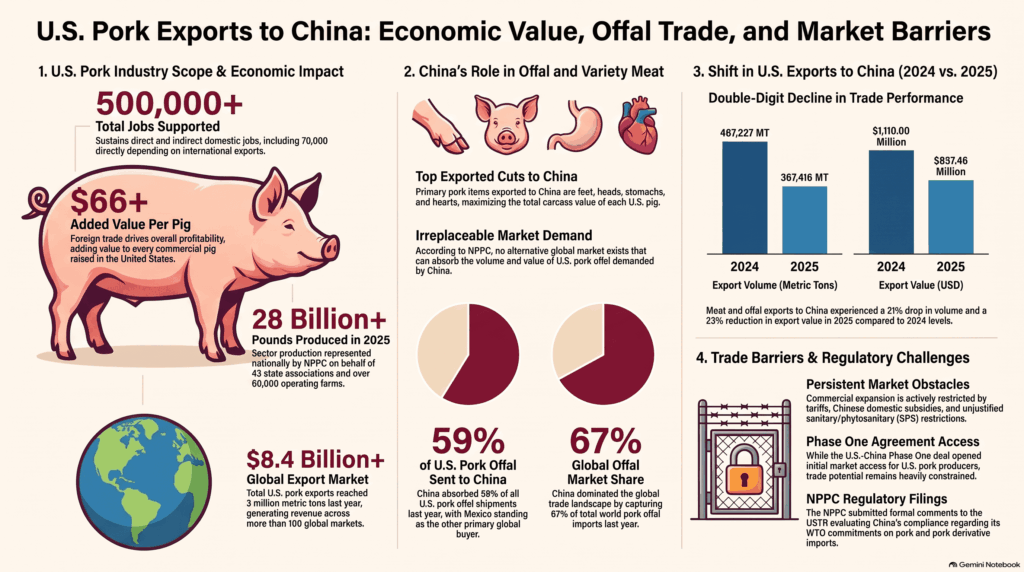
Foreign trade boosts the profitability of all U.S. livestock producers. Each hog sold generates more than $66 in added value thanks to these global sales.
Last year, U.S. pork exports reached three million metric tons. These shipments exceeded $8.4 billion. China once again ranked among the top five destinations.
In 2025, shipments of pork and pork by-products to China totaled 367,416 metric tons. This figure represented a 21% decline compared to the 467,227 metric tons recorded in 2024.
The value of exports to the Chinese market fell to $857.46 million in 2025. This figure represented a 23% decline from the $1,110 million recorded the previous year.
China accounted for 67% of global imports of pork by-products last year. It absorbed 59% of such shipments from the United States. Mexico emerged as the other major buyer.
Pork Industry
The NPPC submitted these comments to the U.S. Trade Representative (USTR). The document assesses China’s compliance with its WTO commitments regarding the importation of pork and pork products.
This organization represents 43 U.S. state producer associations. Its work defends the national and international interests of more than 60,000 operating hog farms across the country.
Pork production is a high-value-added activity for the U.S. agricultural sector. In 2025, this industry produced more than 28,000 million pounds of safe and affordable pork.
The U.S.-China Phase One agreement allowed the U.S. pork industry to gain market access. However, the commercial potential of pork has remained limited due to tariffs, domestic subsidies, and various sanitary and phytosanitary (SPS) restrictions that violate China’s WTO obligations.
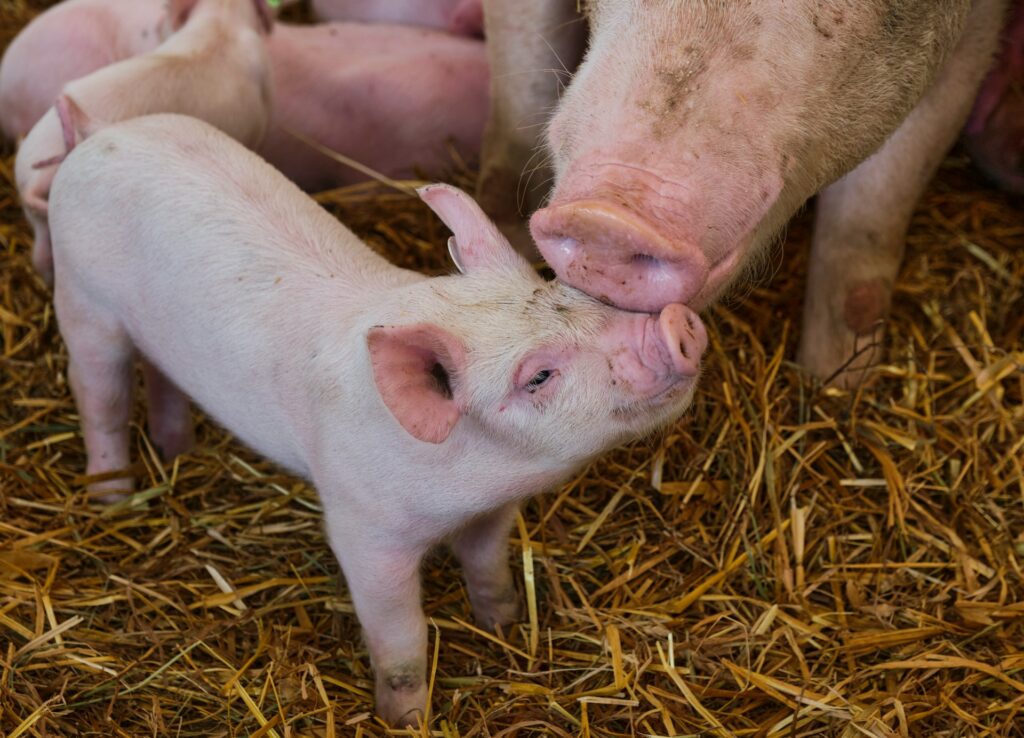
A small pink piglet stands on a bed of golden straw on a farm, looking up. The mother sow tilts her head to gently nuzzle the piglet’s ear and neck. In the background, other piglets rest, their figures blurred.
Photo: Stefanie Poepken, via Unsplash. On U.S. farms, producers raise millions of pigs like this piglet and its mother. Exports of byproducts—such as feet and heads—to China add value to each animal and sustain the domestic industry.
A tender moment between a mother sow and her piglet on straw illustrates pig farming. U.S. exporters ship trotters, heads, and stomachs to China, an irreplaceable market that demands these types of cuts, thereby maximizing the animal’s value.