
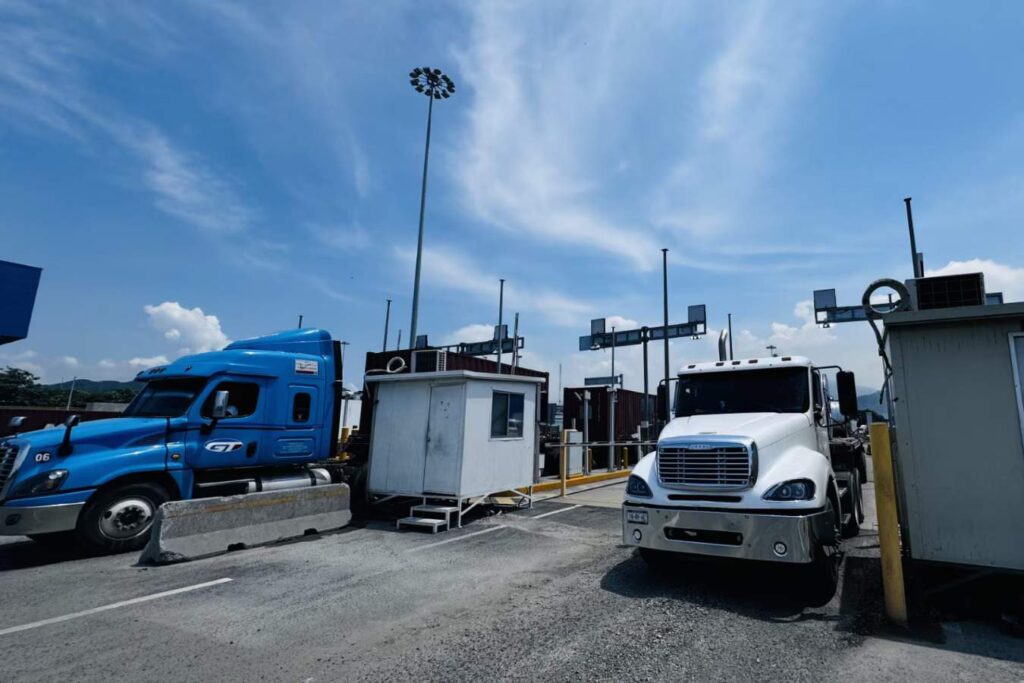
Mexico and the United States carried out 1,142,055 joint customs clearance operations, according to information from the Ministry of Economy.
The main sectors that benefited were companies participating in the IMMEX program and certified firms in the maquiladora, electrical, electronics, automotive, and food industries.
Joint Customs Clearance
Mexico and the United States agreed to strengthen logistics infrastructure and border management during the most recent meeting of the Binational Group on International Bridges and Crossings. The meeting aimed to facilitate regulated trade. It also sought to increase security in the logistics chain and preserve regional competitiveness.
Agencies from both governments prioritized the deployment of customs technology, an increase in non-intrusive screenings, and joint cargo inspections. They also promoted bilateral operational coordination at international border crossings.
The IMMEX program fits into this context of trade facilitation. This scheme allows for the temporary importation of goods and inputs for industrial processes, manufacturing, or export services without paying the General Import Tax, VAT, or countervailing duties.
Bilateral Customs
Initially, a joint customs clearance program between Mexico and the United States succeeded in reducing inspection times by up to 95 percent. It also reduced transportation costs by 50 percent since its implementation in 2017. The strategy, coordinated by the Tax Administration Service (SAT) and U.S. Customs and Border Protection (CBP), optimized the movement of key goods between the two nations.
The program achieved its greatest operational reductions in Baja California. At that location, the clearance of agricultural products at Mesa de Otay reduced wait times by up to 95% by exempting them from physical inspection.
Meanwhile, at Laredo Airport in Texas, unified inspections for air cargo from the automotive, electronics, and aerospace sectors bound for eight Mexican terminals reduced processing times by 60%. Similarly, operating costs were cut in half.
The model was expanded to the San Jerónimo border crossing in Chihuahua, where authorities from both countries conduct coordinated inspections of shipments of computers and electronic products exported to the United States.