
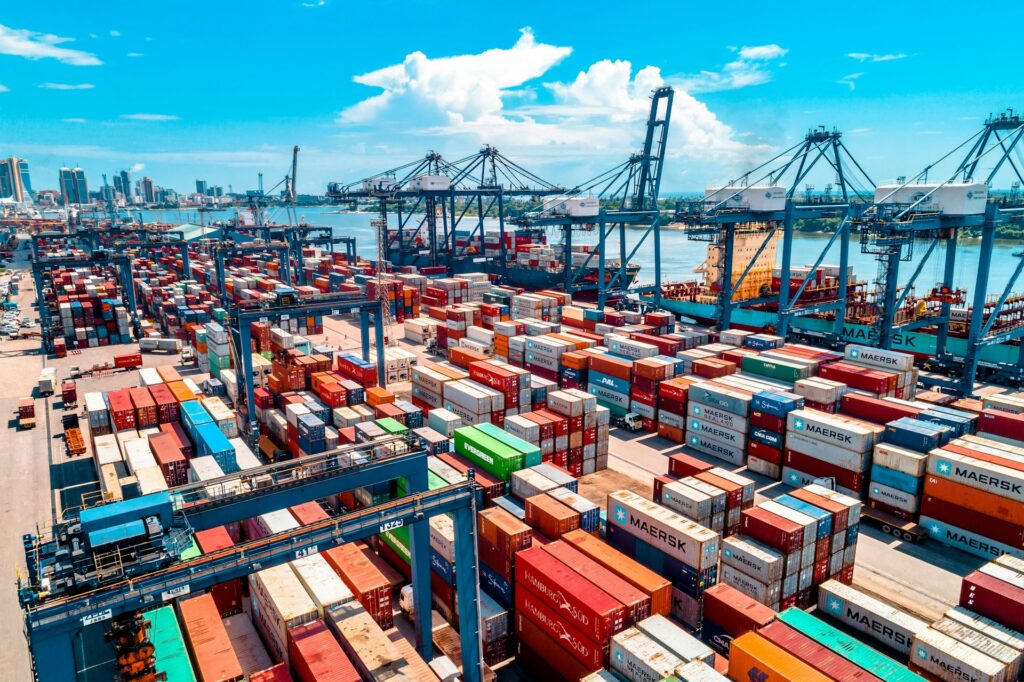
The United States operates the “Detective Border” artificial intelligence system and has adopted several measures to strengthen controls on the transshipment of goods.
The United States maintains high tariffs and severe trade restrictions on Chinese imports. Consequently, the U.S. administration plans to implement additional reciprocal and sector-specific measures. Therefore, these trade control policies could be continuously expanded or modified.
Detective Border
This system was designed to support U.S. Customs and Border Protection (CBP) by integrating shipment data, route histories, product classifications, ownership relationships, production capacity indicators, anomaly detection, computer vision, and other analytical tools.
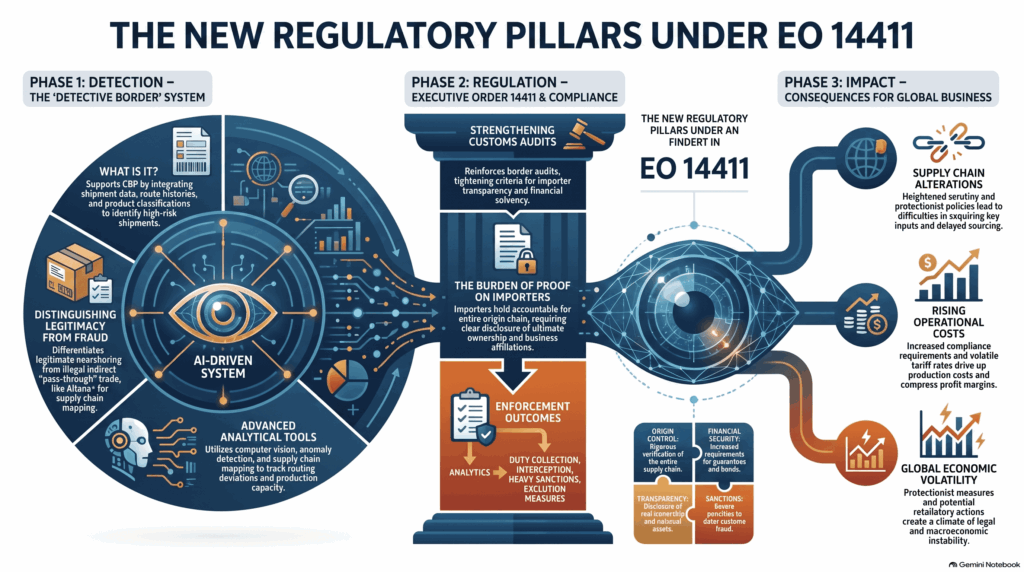
The goal is to enhance CBP’s ability to distinguish between legitimate nearshoring and foreign investment and illegal pass-through trade, identify high-risk shipments, and translate analytical findings into actions such as interception, tariff collection, the imposition of sanctions, and exclusion measures.
Impact on the Supply Chain and Operating Costs
On the one hand, scrutiny of the transshipment of goods has intensified in the United States. On the other hand, product-specific regulations increase the complexity of regulatory compliance.
In fact, these measures have the following direct consequences:
- Disruption of supply: They hinder the timely procurement of key inputs.
- Increased costs: They raise the operating cost structure of production.
- Financial pressure: They limit selling prices and reduce profit margins.
Regulatory uncertainty and global risks
Furthermore, there is a real possibility that these protectionist policies will spread to other countries. For this reason, frequent legislative changes and trade disputes cause constant volatility in tariff rates, treaty coverage, and the application of international standards.
Adverse Effects on Business and the Economy
In conclusion, this environment of trade instability has a direct impact on corporate operations:
- Increase in direct expenses: It raises the final cost of obtaining strategic inputs.
- Adverse macroeconomic effect: It destabilizes the momentum of the global economy.
Finally, all these risk factors would be significantly exacerbated if the United States imposes additional tariffs or if other governments respond with retaliatory measures.
Importer’s Responsibility
The U.S. government enforces strict controls on the illicit transshipment of goods. Consequently, new reciprocal trade agreements include trade protection clauses. Indeed, these provisions prevent third countries from unduly taking advantage of tariff benefits.
Customs Oversight and Executive Order 14411
Furthermore, Executive Order 14411 (Executive Order on Customs) strengthens trade audits at the borders. To achieve this, the regulation tightens criteria in the following key areas:
- Importer Liability: Requires rigorous control over the chain of origin.
- Guarantees and Bonds: Increases requirements for financial solvency and a good track record.
- Trade transparency: It requires disclosure of beneficial ownership, domestic assets, and business affiliations.
- Penalty system: It establishes severe penalties to prevent customs fraud.
Additionally, the report highlights the use of artificial intelligence through supply chain mapping platforms (such as Altana) to track shipments and detect route deviations.
Assessment of the Economic Impact of the Measures
On the other hand, it is premature to determine the net impact of these tariff and customs control policies. This uncertainty stems primarily from two factors:
- Time lag: The collection of customs data and trade metrics is subject to reporting delays.
- Phased Implementation: Various compliance regulations are still in the process of being rolled out operationally.