
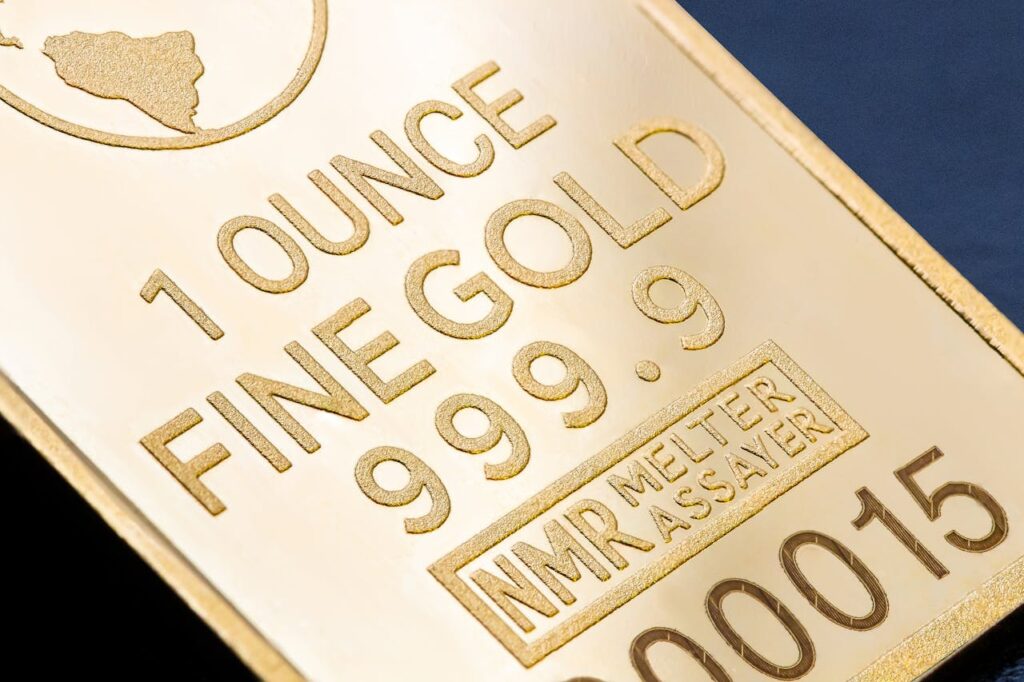
U.S. gold exports soared, partly as a result of uncertainty in the global economy, among other factors.
From January to April 2026, U.S. sales of this product grew at a year-over-year rate of 164%, reaching 56,215 million dollars.
Previously, throughout 2025, these same exports increased by 172%, to $80,583 million.
U.S. Gold Exports
Gold exports from the United States grew strongly in 2025 and 2026 due to a very clear factor: uncertainty in the global economy. With doubts about tariffs and the direction of international trade, many investors rushed to take refuge in gold, triggering massive movements in this metal.

This is where New York and London come in, serving as the “financial heart” of the global gold market:
- New York (COMEX Market): This is where gold futures prices (paper contracts and promises of delivery) are primarily traded.
- London (LBMA Market): This is the world’s largest physical hub, where banks and governments store, buy, and sell actual gold bars.
Normally, the price in both cities is nearly identical. However, due to the instability and logistical problems of those years, the price in New York became disconnected from that in London (what experts call the EFP spread).
Main Destinations
Gold is the ultimate safe haven. Beyond its undeniable value in the global fine jewelry market, it is a strategic asset for central banks, a critical component in advanced electronics, and the cornerstone of anti-inflationary investing.
In the first four months of 2026, the leading destination for U.S. gold exports was Switzerland, with $26,657 million, a year-over-year increase of 244%. Next were the United Kingdom (12,127 million, +41%), Hong Kong (8,687 million, +840%), Singapore (2,982 million, +170%), and India (1,804 million, +329%).
The following table shows U.S. gold exports, in millions of dollars:
- 2018: 20,311.
- 2019: 17,206.
- 2020: 20,520.
- 2021: 27,799.
- 2022: 37,173.
- 2023: 25,792.
- 2024: 29,661.
- 2025: 80,583.
Impact of Tariffs
U.S. gold exports skyrocketed in early 2026, driven by the widening of the EFP (Exchange for Physical) spread in late 2024. This indicator, which measures the gap between the London spot price and New York futures, widened due to hedging operations carried out by various institutions in response to the threat of tariffs on physical gold imports.
Regulatory panic changed the rules of the game. This phenomenon triggered a massive influx of metal into the COMEX exchange, which temporarily distorted the Atlanta Federal Reserve’s GDPNow model. However, following the announcement of a tariff exemption for gold in April 2025, the EFP contracted and the metal began to flow out of the United States in large quantities.
The exemption opened the floodgates. Ultimately, these physical flows of commodities—rather than price behavior alone—are the true reflection of the market’s underlying concerns. The movement of the metal does not lie.
Foreign Purchases
The United States imported $6,244 million worth of gold from January through April 2026. This amount represents a year-over-year decline of 20.1%, according to data from the Department of Commerce.
The following table shows trends in U.S. gold imports, in millions of dollars:
- 2018: 9,626.
- 2019: 9,678.
- 2020: 34,679.
- 2021: 13,886.
- 2022: 9,604.
- 2023: 15,099.
- 2024: 15,944.
- 2025: 30,183.