
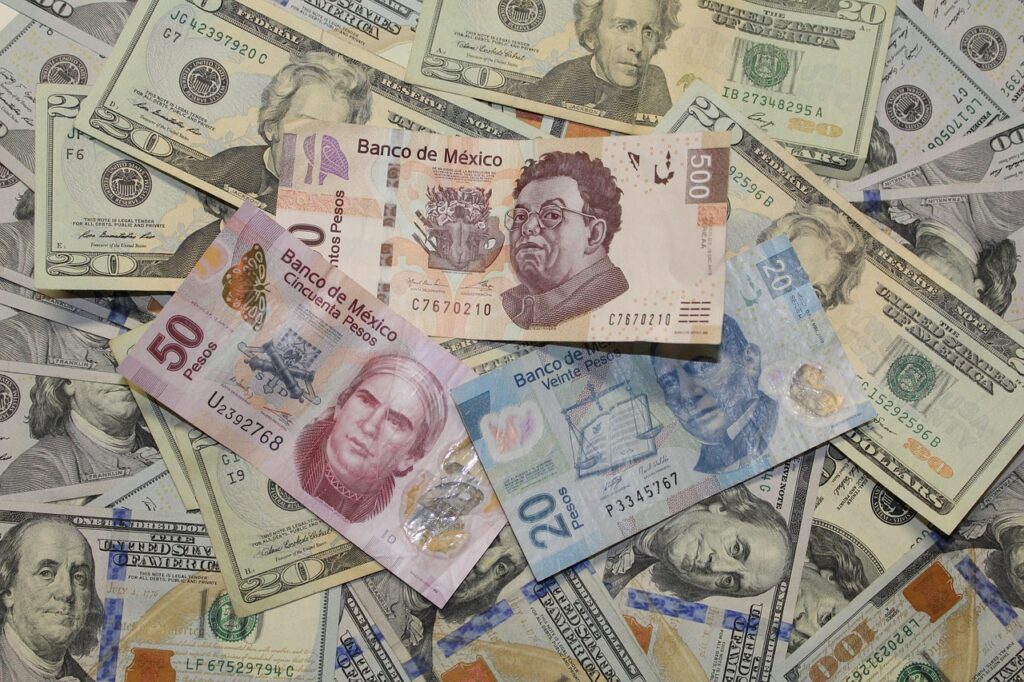
What is the real exchange rate (RER)? It is the indicator that currently reflects the decline in U.S. purchasing power. With the dollar weakening against the Mexican peso and the yuan, U.S. imports are becoming more expensive, causing the U.S. to lose ground globally against almost all nations, with exceptions such as Japan.
The real exchange rate (RER) is the ratio of a country’s export prices to its import prices. A stronger RER means that a country can purchase more imports with a given amount of exports. A stronger U.S. dollar can improve the U.S.’s RER with its trading partners by reducing the dollar price of imports from those countries.
What is the real exchange rate?
Historically, a strong dollar makes U.S. imports cheaper relative to those of its trading partners.

However, from April 2025 to April 2026, the dollar experienced a broad-based weakening against key currencies. It lost 6.1% against the Chinese yuan, 3.2% against the euro, and 1.7% against the British pound.
The greenback’s sharpest depreciation occurred against the Mexican peso, with a 10.6% decline. This trend weakened U.S. purchasing power in those markets, making imports from Mexico, China, and Europe more expensive.
Conversely, the dollar strengthened by 9.8% against the Japanese yen. This exception improved the U.S.’s terms of trade exclusively with Japan, making Japanese products cheaper, while the rest of its trading partners gained exchange rate competitiveness.
Return on Investment
A country’s flow of imports and exports depends on a very simple balance: how expensive or cheap its products are compared to those of the rest of the world, taking into account the value of its currency.
This mechanism can be explained through two direct scenarios:
- When prices rise domestically: If production costs in the United States increase, its exports lose appeal abroad because they become expensive, which reduces overseas sales. At the same time, for local consumers, buying imported products becomes much more tempting and economical than purchasing domestic ones.
- When prices rise abroad: If inflation hits trading partners, U.S. goods become competitive by default. Since they are relatively cheaper, the international market begins to demand and purchase more U.S. exports.
In short, international trade moves toward where money yields the highest return, constantly reacting to which country’s prices rise first.