

A bilateral surplus is not sufficient for a country to be subject to tariffs under Section 301. This was stated by the National Foreign Trade Council (NFTC),
“A bilateral goods surplus may not, by itself, constitute evidence of conduct subject to measures under Section 301,” said the NFTC. This statement was made in a letter addressed to the United States Trade Representative (USTR).
Bilateral Surplus
Section 301 grants the USTR the authority to investigate and take action against foreign countries that violate international trade agreements. Additionally, it covers those engaging in “unjustifiable, unreasonable, or discriminatory” practices that impose a burden on U.S. trade.
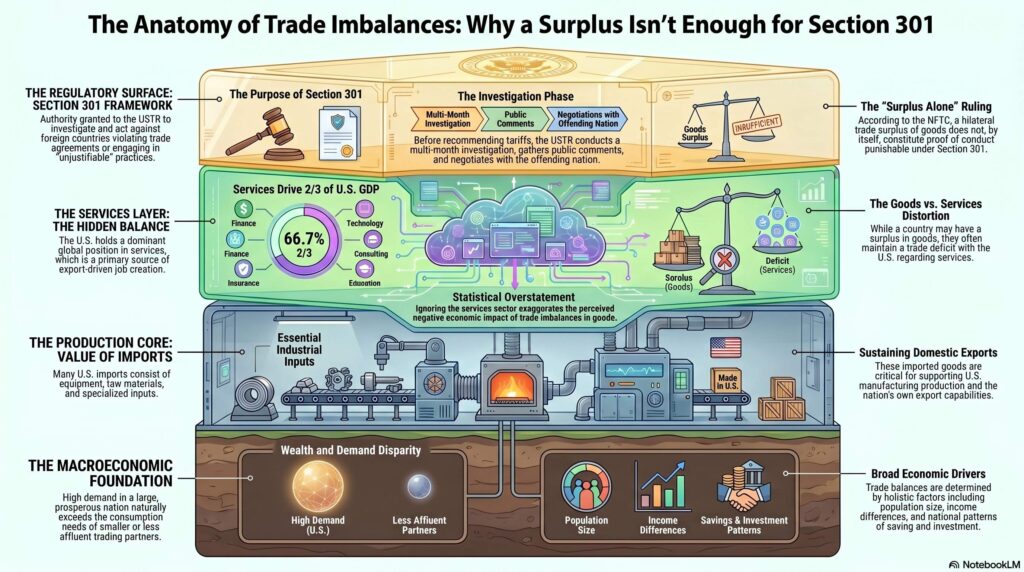
Pursuant to Section 301 of the Trade Act of 1974, the USTR conducts a multi-month investigation, solicits public comments, and negotiates with the offending country before recommending specific measures (such as tariffs or quotas) to the president.
Imbalances in bilateral trade in goods simply mean that the United States imported more goods from a trading partner than it sold to that partner.
Holistic Factors
According to the NFTR, the trade balance in goods is determined by broader macroeconomic factors. These include differences in income, population, and overall consumption potential. Savings and investment patterns also play a role.
Consequently, the NFTR argued that demand for goods in a country as large and prosperous as the United States is expected to exceed the needs of smaller or poorer countries.
In fact, many U.S. imports, such as equipment, inputs, and raw materials, are essential to sustaining manufacturing production and exports in the United States.
Furthermore, the goods trade balance does not provide a complete picture of the United States’ bilateral trade relations. This is because it does not account for exports of services. In this area, many countries run a trade deficit with the United States.
In fact, focusing exclusively on trade in goods and failing to account for the global dominance of the U.S. services sector—as a source of export-driven job creation and as the source of more than two-thirds of U.S. GDP—exaggerates the economic impact of trade imbalances in goods with U.S. trading partners.
In summary, the NFTR concluded that a bilateral goods surplus may not, on its own, constitute evidence of conduct subject to measures under Section 301.