
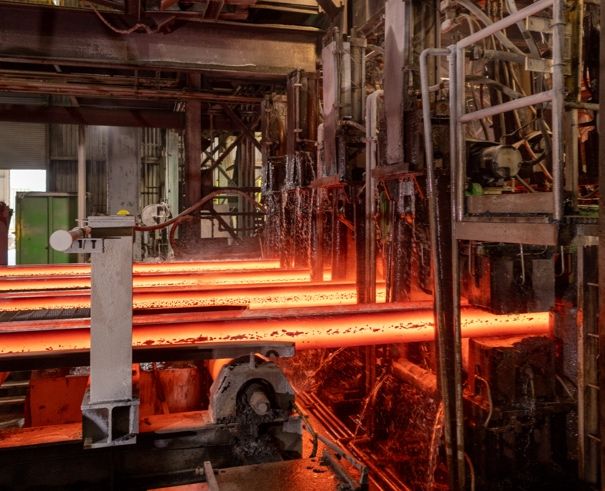
China’s steel production capacity rose from approximately 131.8 million metric tons (MMT) to over 1,000 MMT between 2000 and 2019. This represents an increase of more than 600 percent.
According to OECD databases on steel capacity, this production surge was largely driven by government policies aimed at rapid industrial expansion. Additionally, self-sufficiency was promoted through state-owned enterprises.
China’s Steel Production Capacity
According to Mexico’s National Chamber of the Iron and Steel Industry (Canacero), this state-supported increase in production capacity has exerted strong pressure on global prices.
This has also contributed to harmful increases in imports across multiple markets and has created persistent imbalances that other economies have had to address through corrective measures and defensive trade policies.
Furthermore, some Southeast Asian countries have joined in this problem.
Logistics in the Steel Industry
In Canacero’s view, the USTR should not include Mexico in an ongoing investigation into structural overcapacity based on government-directed overcapacity. This characterization does not apply to Mexico.
In contrast, Canacero proposed expanding existing customs cooperation under Chapter 7 of the USMCA to include joint verification protocols for steel imports. In particular, they want a focus on declarations of origin from producers in non-market economies.
The Chamber added that the Mexican blockchain-based traceability initiative, currently under development, could be launched as a joint pilot project with U.S. Customs and Border Protection (CBP).
The United States maintains a trade surplus with Mexico in steel products of approximately 2.5 million metric tons and $4.4 billion, making Mexico the only major steel-producing economy with which the United States maintains a positive trade balance in this sector.
Conversely, Mexico does not have structural overcapacity in the steel sector. There is no pattern of large, persistent steel trade surpluses or underutilized industrial capacity driven by government intervention.