
Mexican cattle exports fell 78.2% year-on-year in 2025, reaching US$335 million, according to data from the Bank of Mexico. The collapse is due to the suspension of live cattle shipments to the United States due to cases of cattle screwworm.
Historically, Mexican cattle sales reached a record $1.535 billion in 2024.
Health suspension impacts agricultural foreign trade
The health restriction due to Cochliomyia hominivorax disrupted livestock supply chains and affected trade flows under the framework of the Treaty between Mexico, the United States, and Canada.
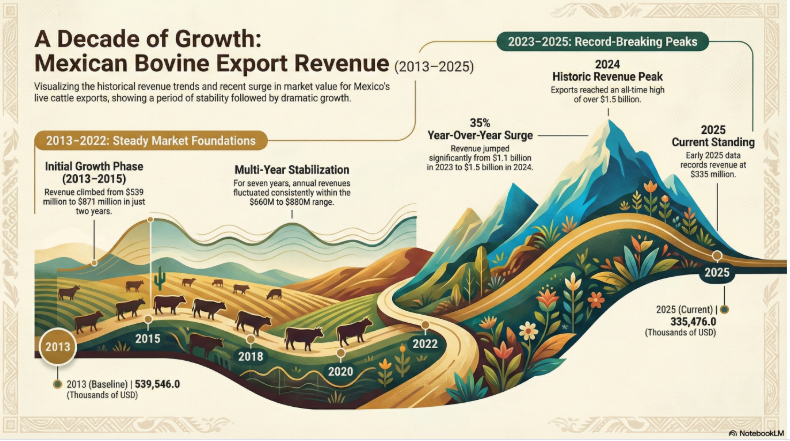
It is estimated that live cattle shipments will decrease by 81% in 2025, to approximately 240,000 head, compared to 1.25 million the previous year. The narrow export window for calves—between three and four months—limited their international placement and forced their absorption into the domestic market.
Productive reconfiguration and pressure on the domestic market
Faced with the suspension, producers redirected animals to domestic feedlots. Small farmers opted for domestic slaughter to avoid higher costs for quarantines, transportation, and health treatments. This reconfiguration impacted the cost structure and logistics of the agro-export sector.
2026 projections: rebound in beef
By 2026, the US Department of Agriculture forecasts a 23.8% increase in Mexican beef exports, up to 390,000 tons. The agency anticipates that health restrictions will limit cattle to US feedlots, strengthening Mexico’s exportable supply.
In addition, it projects that Mexican beef and veal production will increase by 4.5% to 2.3 million tons of carcass weight. Domestic consumption would grow by 0.2% to 2.22 million, while imports would rise by 6.5% to 310,000 tons.
In contrast, beef production in the United States is expected to decline by 1% in 2026, affected by lower availability of steers and heifers and import restrictions from Mexico. This adjustment reconfigures the regional supply balance under trade policy and animal health dynamics.