
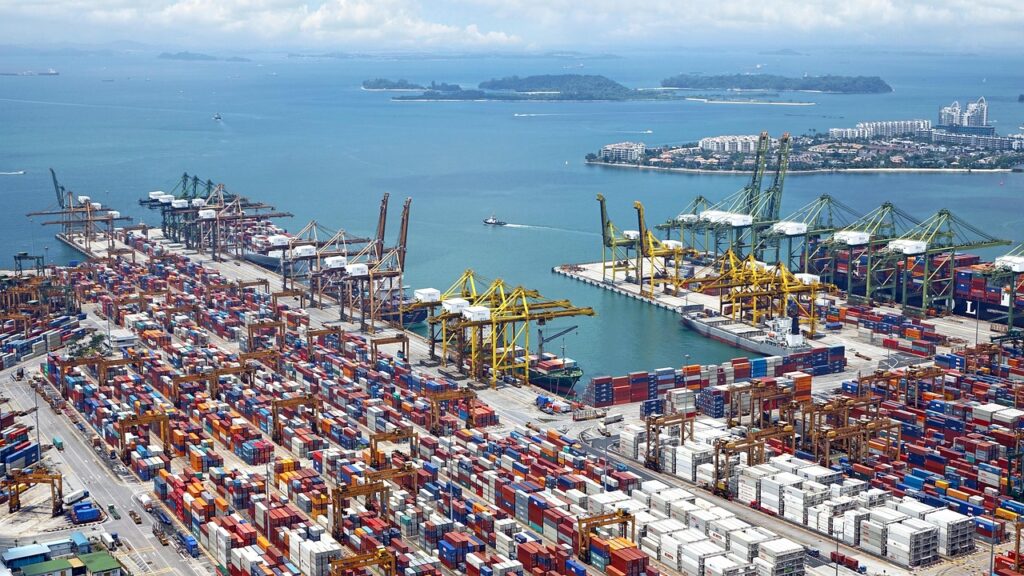
The World Trade Organization reported that globalization continues to grow modestly in terms of trade flows and the integration of global value chains (GVCs).
This progress reflects structural adjustments in production, trade, and global industrial organization.
Growth of globalization
According to the WTO, key economies such as China, the United States, and the European Union reduced their dependence on foreign value added in domestic consumption. Thus, the trends of relocation and regionalization consolidated as a dominant feature of recent trade.
The report notes that geopolitical fragmentation negatively affected gross and direct value-added trade. In contrast, indirect value-added trade remained, in general terms, largely unchanged over the period analyzed.
In this context, Russia’s trade was reoriented towards China and India. At the same time, Central and Western Asia emerged as transit hubs, while indirect routes between the United States and China via connecting economies such as Mexico and Vietnam grew.
Global Value Chains
Economies with greater participation in GVCs continue to dominate, although their combined share fell from 76% in 2010 to 63.6% in 2025. At the same time, countries with low integration increased their participation, pointing to moderate growth in globalization.
Despite successive crises, trade has shown resilience. However, since 2022, a growing gap has opened up between traditional trade and GVC-related trade, suggesting a more profound reorganization of global production networks.
Services surpassed goods in their share of GVCs. In addition, they showed greater resilience after the pandemic, especially digital services such as finance, telecommunications, and information technology.
According to the WTO, the average number of production stages in GVCs has lengthened since 2020. This change was in response to logistical disruptions and trade redirection, with the most visible impacts in Europe and Central and Western Asia.
“Globalization is restructuring, not reversing,” the WTO said. The integration of GVCs has slowed since 2011, concentrating production, trade, and investment in technologically advanced and regionally integrated centers.
Finally, the agency warned that apparent diversification masks persistent dependencies, particularly in Latin America, the Caribbean, and Africa. Although they participate in GVCs, many economies remain engaged in low-value activities, without ensuring domestic capture or resilience.