
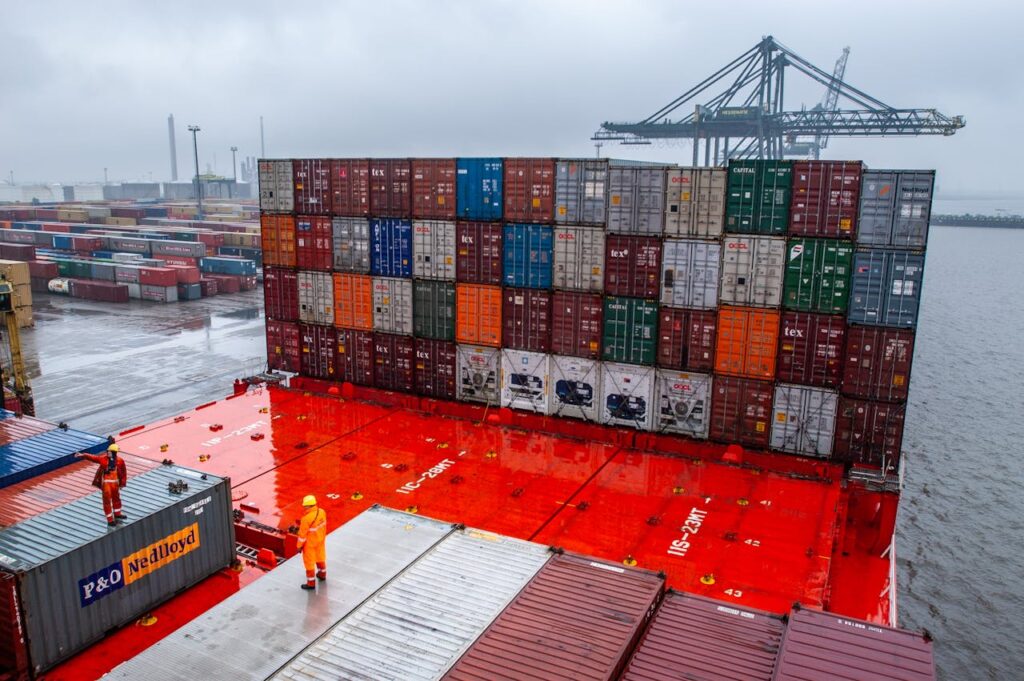
The Mexico Fund highlighted that the Mexican economy faces delays in some investments, but has high potential to benefit from the reorganization of global trade.
From its perspective, Mexico‘s long-term economic growth could be further boosted by nearshoring; however, due to global uncertainty over tariffs, some investments have been postponed.
Reorganization of global trade
Mexico recorded a historic high in Foreign Direct Investment (FDI). Between January and September 2025, it attracted $40.906 billion. The figure represented year-on-year growth of 14.5%, according to official data from the Ministry of Economy.
At the same time, US tariff policies generated global volatility. However, the current framework is favorable for Mexico. Products that comply with the USMCA maintain preferential treatment. This strengthens export competitiveness vis-à-vis countries outside the agreement.
During the first nine months of 2025, the Mexican economy grew at a moderate pace. The momentum came from external demand. Manufacturing exports to the United States set records. The performance of the services sector also stood out, despite weaker domestic consumption.
Looking ahead, according to The Mexico Fund, nearshoring remains promising, although some investments have been delayed due to tariff uncertainty. In addition, the government presented Plan Mexico in 2025. Added to this is the review of the USMCA in 2026, which is being closely monitored by investors.
Monetary easing
During the period ending October 31, 2025, major central banks cut rates. The Federal Reserve and the Bank of England lowered rates by 100 basis points, and the ECB reduced rates by 125 basis points, to ranges between 2.15% and 4.0%.
In Mexico, Banxico deepened monetary easing. The benchmark rate fell 325 points to 7.25%. Inflation fell from 8.7% in 2022 to 3.6% in 2025. Even so, the real rate remained attractive.
The United States led FDI flows to Mexico. It accounted for 39.5% of the total, ahead of Spain, Japan, the Netherlands, and Canada. Together, these five countries contributed 72.6% of the FDI received.
In particular, US investment showed significant growth. Its flows grew by $1.672 billion. Thus, they rose from $14.474 billion to $16.146 billion during the first three quarters of the year.
Spain stood out with a significant rebound. Investment changed direction and increased strongly. It rose from -$903 million to $5.765 billion between the first nine months of 2024 and 2025.