
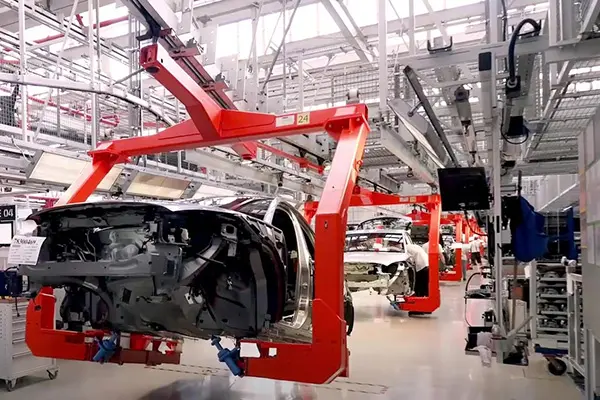
Mexico will demand compliance with automotive rules of origin in the United States-Mexico-Canada Agreement (USMCA), said Economy Secretary Marcelo Ebrard.
At a press conference last Thursday, Ebrard said that no one in Mexico is proposing to end the USMCA and that, on the contrary, there is a broad consensus in favor of maintaining this trade agreement.
Compliance with rules of origin
Ebrard said that there is also a consensus that tariffs should not be imposed under the USMCA, which goes against the spirit of the treaty, and that dispute settlement panels should be complied with. “Mexico won the rules of origin panel because it has not been fully implemented,” he added.
The case was triggered when Mexico and Canada challenged the United States‘ interpretation of North American content requirements. In particular, they questioned the rules of origin for the automotive industry. The complaint was filed under the dispute settlement mechanism between states in Chapter 31 of the USMCA.
The United States advocated a stricter interpretation for calculating North American content, particularly with regard to major components such as engines and transmissions. In contrast, Mexico and Canada promoted a more flexible interpretation. According to their position, this approach makes it easier for North American producers to comply with the USMCA’s content requirements.
Cars and auto parts
The 2024 review by the U.S. Trade Representative (USTR) of the USMCA’s automotive provisions sent a mixed message. On the one hand, vehicle and auto parts producers maintain significant investments in sourcing and production in North America. Their goal is to comply with the USMCA’s rules of origin.
However, warning signs have emerged. Various stakeholders have pointed out that the rules of origin are not operating as expected. They have also called for more information and greater transparency regarding their application. At the same time, automotive suppliers have warned that regulatory complexity continues to generate administrative burdens. Added to this is a key piece of information: U.S. trade statistics indicate that a growing proportion of auto parts trade is not claiming USMCA tariff preference.
From a labor perspective, concerns are similar. Stakeholders noted that a lack of transparency in the implementation and enforcement of rules of origin—including alternative staging arrangements and labor value content requirements—has made it difficult to assess the actual effectiveness of these provisions.